Blog

Use of Medications in Food Producing Animals in Australia

Comments Off on Use of Medications in Food Producing Animals in Australia

British and overseas trained veterinarians locuming or working in Australia should be aware that the following substances are not permitted for use in food-producing animals in Australia. This may be different from Europe in particular – vets practising small animal medicine should be aware of these restrictions as you may not be able to dispense medicines to hobby farm clients in particular that are in use in Europe (eg. Baytril, Metronidazole):

  • carbadox
  • chloramphenicol
  • clenbuterol (except for tocolysis as per APVMA approved label)
  • diethylstilboestrol and related compounds (hexoestrol, dienoestrol)
  • fluoroquinolones
  • nitrofurans (including furazolidone and nitrofurazone)
  • nitroimidazoles (except dimetridazole for use on birds not intended for human consumption and breeders as per APVMA approved label)
  • phenylbutazone
  • salbutamol
  • thyrostats (eg thiouracil)

For more information please visit the Australian Pesticides and Veterinary Medicines Authority website https://apvma.gov.au/node/11626

Author:

Wendy Nathan
Kookaburra Veterinary Employment
November 2017

This information includes the views and opinions of Kookaburra Veterinary Employment and is of a general nature only. Factual information is believed to be correct at the time of writing, however, should not be relied upon and any person should confirm details with the relevant authorities and through their own research prior to acting on any of the suggestions in this article.

09/02/2018 |

Update on the Workplace Staff Shortage – May 2023

Comments Off on Update on the Workplace Staff Shortage – May 2023

With the AVA Annual Conference coming up, it’s a good time to release some current figures to update the trends that Kookaburra Veterinary Employment is seeing in Australia, for the “State of the Market” panel discussion.

Vets

table showing Australian permanent vet jobs advertised with kookaburravets.com from 2014 to 2023

Of the current 735 open vet vacancies, 131 have been continuously advertised for more than 8 months.

In the last 3 months (February, March, April 2023), 1125 jobs have been advertised.

  • 27% of these have been filled by Kookaburra,
  • 2% have been filled by other advertising, or through personal contact
  • 9% have been removed because the clinic either gave up looking or restructured their clinic staff to cope – although some clinics are now reporting having a reduced workload, following the post-covid boom
  • 62% are still available.

As of 30th April 2023, 52 clinics had been advertising continuously for longer than 2 years without filling their vacancy

table showing comparison of three 3 months periods of job listings in 2020, 2021 and 2023

Vet Nurses

In March 2020 we had 236 vet nurse jobs listed.
In April 2021 we had 337 vet nurse jobs listed.
As of May 9th 2023, we have 316 vet nurse jobs listed.

Discussion

Kookaburra has noted the following factors

  • An increase in the numbers of vets required to cover the workload in individual practices
  • An increase in the numbers of new clinics opening – both corporate, and privately owned. 10 years ago Kookaburra had roughly 2100 clinics listed in Australia – we now have over 2600.
  • Many of the practice owners and managers that we talk to on a daily basis are highly stressed by the workforce shortage, and many are also resigned to having great difficulty hiring suitable new staff

Kookaburra circulated a Salary survey in the winter of 2022 and one of the questions we asked was about future plans (see chart below).
26% of vets (63 vets ) who responded to the Kookaburra Vets Salary Survey 2022 said they were planning on leaving general practice by 5 years’ time, either retiring, leaving the profession entirely, taking a break, or moving into another area of the veterinary industry.
In the 2019 survey, 24% of responding vets (142 vets) were planning on leaving general practice by 5 years’ time. That’s a lot of vets leaving general practice – and it doesn’t seem to be slowing down at all.

(copy of the full Salary Survey 2022 report available here: https://www.vetsuppliersdirectory.com.au/salary-survey-2022/ )

Chart showing survey results - 5 year plan

Author:
Wendy Nathan
Kookaburra Veterinary Employment

This information includes the views and opinions of Kookaburra Veterinary Employment and is of a general nature only. Factual information is believed to be correct at the time of writing, however, should not be relied upon and any person should confirm details with the relevant authorities and through their own research prior to acting on any of the suggestions in this article.

15/05/2023 |

Un-Used VINNO Ultrasound Equipment

Comments Off on Un-Used VINNO Ultrasound Equipment

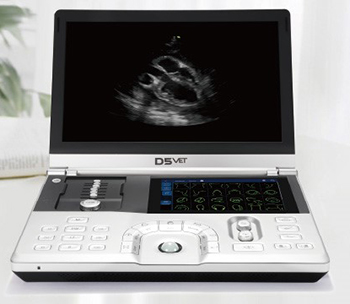
VINNO D5-VET Portable Ultrasound (Brand New, Unused Includes 2 Probes)

Surplus to clinic requirements. Purchased for a project that didn’t proceed.

  • 15.6” wide-angle LCD display
  • 8” glove-compatible touch screen
  • Soft integrated keyboard with external keyboard compatibility
  • User-friendly, ergonomic layout
  • Compact and lightweight for mobile use
  • Still in original packaging
  • Full functionality and warranty registration available to new owner

Price: $12,000 + GST  (RRP: $22,000)

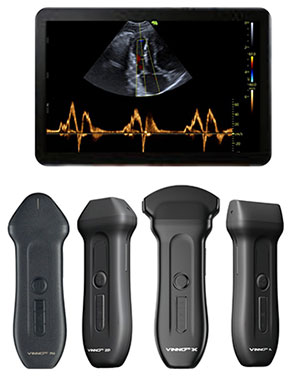
1 X VINNO Q+ Handheld Vet Ultrasound Unit (Near-New)

  • 1 Unit Available – Includes Tablet + Pre-Installed Veterinary Software
  • Used only for demonstration purposes, never in a clinical setting.
  • 1x Linear Probe, Ideal for MSK, small parts, tendon, superficial imaging

Price: $3,500 + GST  (RRP: $5,500)

Shipping or pickup available.

Priced for quick sale. Serious enquiries only.

Located in Greater Western Sydney

Phone: 0448 387 005 

26/11/2025 |

Therian – Designing for a Veterinary Start-up

Comments Off on Therian – Designing for a Veterinary Start-up

It can be daunting for any professional to take the leap and start their own business. However, with the right team of professionals, it can be a relatively straightforward undertaking. Whilst you may have confidence in your ability to build your veterinary team, putting together a team to design and build a veterinary clinic may not be as comfortable.

A Commercial Real Estate Broker should be one of the first professionals engaged to help with finding the ideal property for your new clinic. The Broker should be able to provide a market analysis to help identify potential properties and help you narrow down the budget that should be allowed for leasing or purchasing a property. One of the first things your Real Estate Broker will need to know is how much space or how large of a property you need. By working with an experienced Veterinary Architect when you begin to search for property, you can set yourself up for success early on and minimise the time and expense of building, which is essential to every budget critical start-up.

Pre-design services available from an Architect include “Needs Assessments” and “Feasibility Studies”. As part of a “Needs Assessment”, an Architect should be able to provide you with a veterinary specific design questionnaire that will ask you all the relevant questions about your intended business, to inform the project brief. Once the project brief is established, the Architect can then accurately estimate how much lease space or land is needed to suit your intended operational requirements. Having an accurate estimate of what is needed will quickly narrow the search by your Real Estate Broker. The Architect can then help evaluate the right-sized properties as part of a Feasibility Study. This process should help you confirm the suitability of specific properties for your start-up, and help you start to consider the potential costs involved with building your practice. There can be a broad variation in costs to fit out different properties. A feasibility study should identify the major costs to be expected, in addition to how well they may be suited to veterinary practice use.

An Architect that has worked specifically with start-up veterinary practices should be able to suggest cost-saving design ideas, to help minimise the cost of the build, and maximise the revenue-generating potential for any given size clinic. It is important for every start-up not to “over-build”. Controlling the cost of the build starts with the needs assessment by establishing the size of the clinic that is needed. The Architect’s concept design has the potential to impact construction costs and potential income by optimising space usage, maximising revenue-generating areas, and minimising non-revenue-generating areas.

Lastly, during the detailed design, striking the right balance for quality of materials that minimise initial costs, while still delivering a facility that will be easy to maintain and suitable for the intended purpose is key. An experienced Veterinary Architect can advise on the relative cost of materials and the performance trade-offs between one vs another.

When considering a new build, be sure to pre-qualify and interview your Architect as you would anyone you are going to employ. Scrutinise their specific, relevant experience, and don’t be afraid to ask questions. The Architect should serve as a trusted adviser to support you throughout the design and build, so if they are unwilling or unable to explain the process in a way you can understand, they may not be the right fit for your project. Success starts with building the right team.

To learn more about us or to get started, please call +61 7 5657 6777 or visit: therian.com.au/veterinary-clinics-hospitals/

10/08/2023 |

The Vet Shortage – Musings of an Employment Agent

Comments Off on The Vet Shortage – Musings of an Employment Agent

Kookaburra Vets LogoJanuary 2019

In the last 12 to 18 months, the veterinary shortage has continued to bite in Australia and is now affecting practices in the cities as well as rural and regional areas. The results of the Lincoln Institute survey in Australia have been in the news this month ( Link to SBS report) , and Kookaburra Vet Employment has recently been approached by multiple news outlets for interviews and comments ( link to ABC Sunshine Coast article )

A BVA (British Veterinary Association) and University of Exeter study in the UK released late in 2018 found that 37% of vets were actively thinking about leaving the profession (1,250 vets surveyed ). 59% of vets said they were either very stressed or somewhat stressed at work. A smaller Kookaburra Vet Employment survey from 2017 of just 336 vets showed that 17% of associates thought they would have left the profession in the next 5 years.

The suicide rate of vets in Australia has been found to be 4 times higher than the general population – that’s one vet every 12 weeks. Here at Kookaburra we feel the impact of losing a veterinary colleague way too frequently.

Male VetSo is there a shortage of vets – and is it due to vets quitting the profession?

In absolute terms looking at the widely reported figures in Australia, NZ, the UK and the USA for numbers of vets compared to numbers of pets – no, there shouldn’t be a shortage. So why are there so many veterinary vacancies? There are between 11 and 12,000 vets registered in Australia, and there are approximately 2,200 veterinary practices.

This time 5 years ago, in 2014, Kookaburra Vet Employment had 170 jobs listed for vets, and 20% of those jobs were suitable for new graduates (the clinic could provide the support and training needed for a new or recent grad). It was taking 8-9 weeks to fill a vet job.

At the moment (January 2019) Kookaburra Vet Employment has 437 current vet jobs listed, and 34% of those will now consider a new graduate. Vacancies are being listed for an average of 13 weeks. However, in the last 3 months, 11% of vacancies listed with us have been removed because the clinic either gave up looking, or restructured their clinic staff to cope. Some practices on our books have been advertising continuously for over 3 years without filling their vacancy.

So what impact does pay rates have?

Kookaburra did a small survey (including vets and vet nurses) in 2018 and found that out of 167 respondents, 73% had not had a pay rise in the last 12 months.  Out of 235 respondents, 70 % said that a pay rise would make them reconsider if they were considering looking for another job, and 21% said that it may make them reconsider.
Most vets earn in the range of $60,000 to $90,000 pa.
Female VetAn interesting study, again from the BVA and University of Exeter, released in 2018, investigated gender bias in the veterinary profession ( link to BVA Employers’ Study 2018) . The profession is becoming increasingly feminised as more than 50% of recent graduates are female. The VetFutures study surveyed 260 employers and managers. 42% believed there was no gender discrimination in the veterinary profession – but then that same section when tested in the survey offered males a higher salary than females. Could the feminisation of the profession be linked to stagnating pay rates?

As an employment agency we hear from both employers and job seekers.

For employers, retaining suitably qualified staff seems to be a challenge, however, we have found that very many clinics have expanded dramatically over the last 10 years or so, and have sought to employ more vets. Do they really have an increased workload and associated practice income, or are they trying to create a better work/life balance? Without an increase in practice income, new vacancies cannot be supported. Kookaburra has also seen a number of new practices set up in areas already well supplied by vets – including private practices, house call practices, as well as corporate practices and in-pet store clinics.  This has seemed to outstrip closure of clinics.

Associate vets are looking for a practice where they are paid well according to the work they do, where they know their work is valued by colleagues and clients, where they have accessible role models and mentors, access to and support for continuing education, a good work/life balance, and a modern well equipped workplace with trained supportive staff. Practices that provide this are likely to have less trouble recruiting, and more success at retaining the staff in whom they have made an investment.

Author:

Wendy Nathan
Kookaburra Veterinary Employment

This information includes the views and opinions of Kookaburra Veterinary Employment and is of a general nature only. Factual information is believed to be correct at the time of writing, however, should not be relied upon and any person should confirm details with the relevant authorities and through their own research prior to acting on any of the suggestions in this article.

22/01/2019 |
© Vet Suppliers Directory 2019. Vantage Theme – Powered by WordPress.
Skip to toolbar