Blog

2019 Salary Survey Results – Part 2 – Gender Differences

0

Kookaburra_Logo_stacked

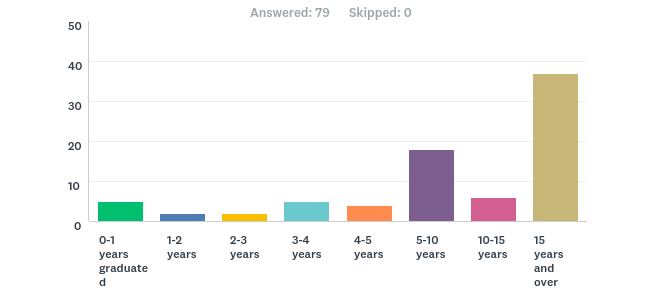
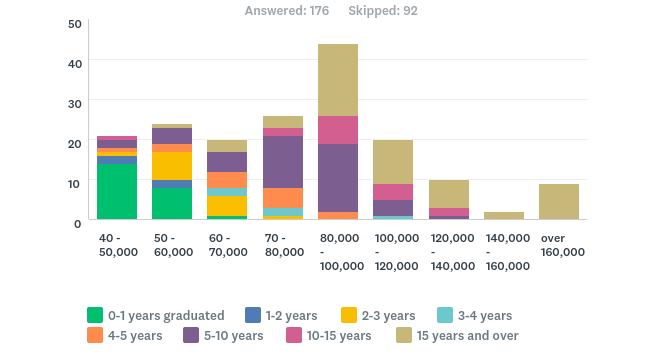
We decided to include a question on gender in this year’s survey. 594 vets chose to answer either male or female. There was no intent to offend anyone by not including an option for a gender other than male or female; the question was optional and we were interested in whether pay rates vary specifically according to whether someone is male or female. When looking at the data, we excluded practice owners/partners, on the assumption that they wouldn’t show gender bias for or against themselves – although this may not actually be true.

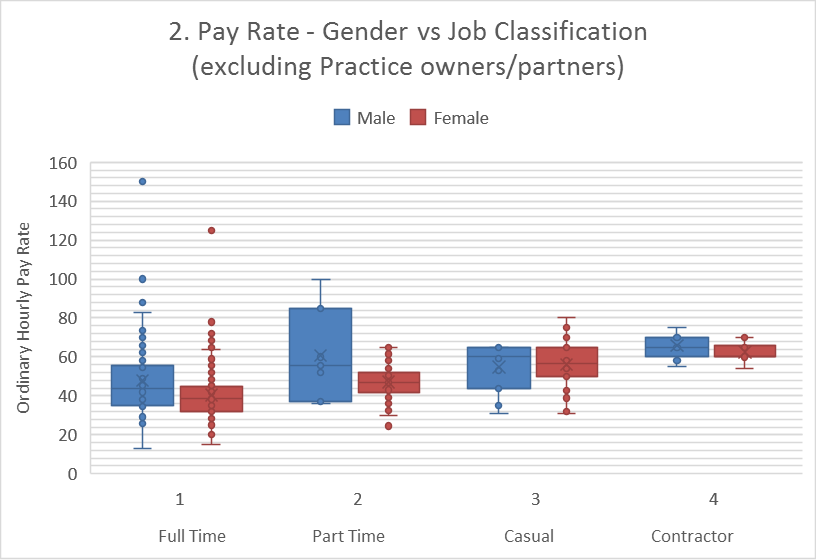
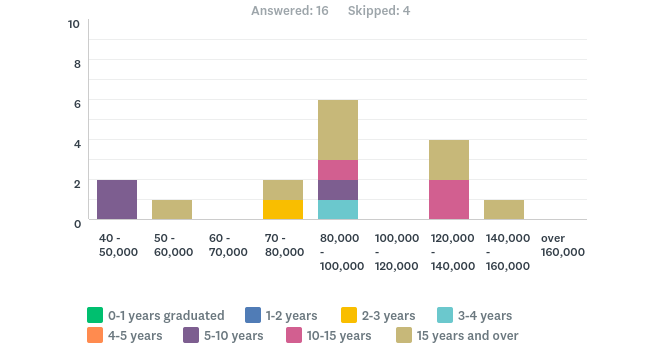
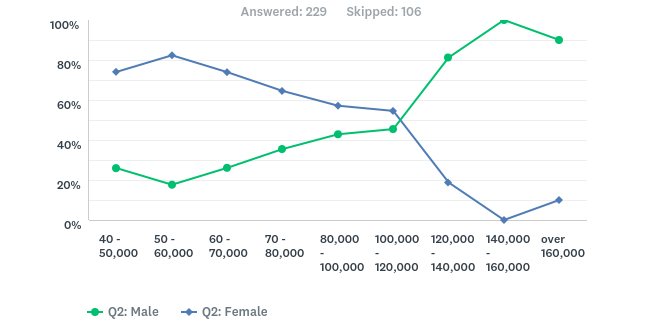
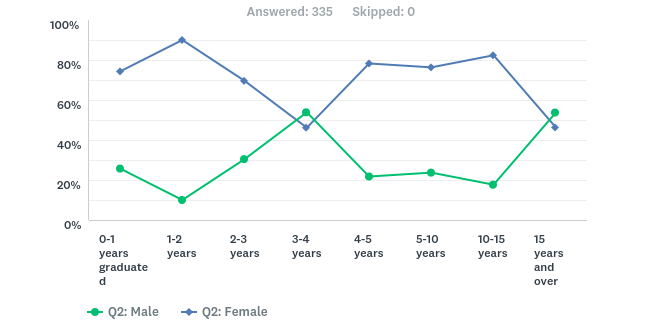
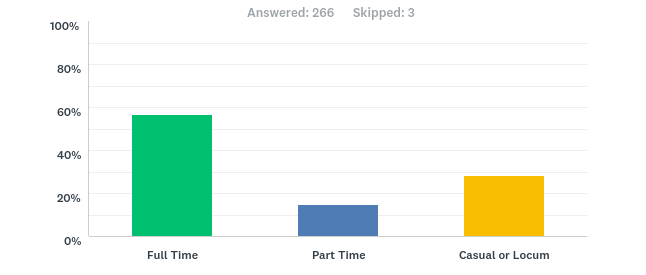
The results show a difference of about $4 an hour in the median hourly rate for full time vets between males and females, which is 10%, and means a difference in the calculated annualised salary of $7,904. This difference persists in most categories of both experience, and number of years since graduation.

To download this Report as a printable pdf please click here
https://www.vetsuppliersdirectory.com.au/wp-content/uploads/2019/09/Salary-Survey-2019-part-2-Gender-difference.pdf

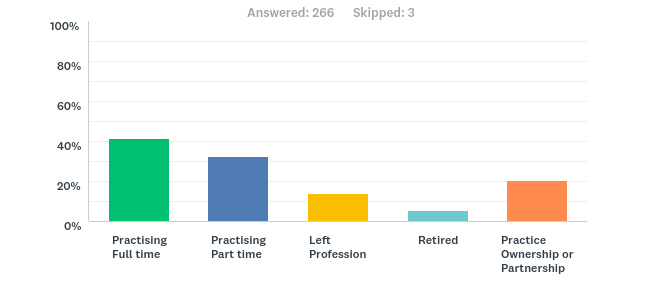
Gender vs Job classification (2)

Gender vs Job Classification

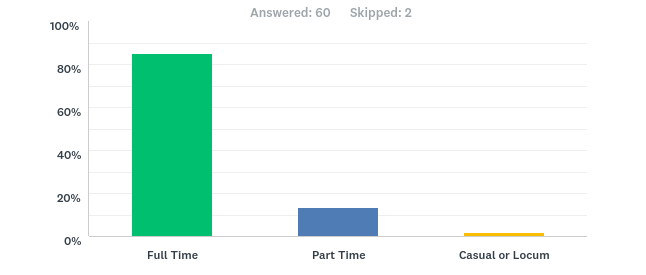
Gender vs Experience - Full Time only

Gender vs Experience level

* Key to Self-Assessed Experience Level

  1. Has broad theoretical knowledge, requires a more experienced vet to be available for discussion for consults/medicine, and guidance for surgery most of the time
  2. Confident for consults, requires guidance for surgery/procedures most of the time
  3. Confident for consults and routine surgery and seeks guidance for new procedures
  4. Confident for consults and routine surgery, able to work sole charge regularly
  5. Confident for consults, surgery, sole charge, and after hours emergencies
  6. Has or is working towards post graduate qualification in medicine, or other non-surgical qualification
  7. Has or is working towards post graduate qualification in surgery or ECC
  8. Has additional qualifications, supervises and teaches less experienced vets
  9. Has or is working towards specialist qualification
  10. Experienced in non-clinical / Industry roles


© Copyright Kookaburra Veterinary Employment

2nd September 2019

Logo

04/09/2019 |

2019 Salary Survey Results – Part 1

1

Kookaburra_Logo_stackedThank you to all the vets who participated in this year’s Salary Survey. There was a total of 595 respondents, compared to 336 in 2017.

Results have been published in 4 separate reports, of which this is the first:

  1. Pay Rates compared by practice type, location, experience level, numbers of years graduated, corporate vs non-corporate, and by job classification (full time, part time, locums, and contractors)
  2. Gender Differences
  3. Out of Hours and Extras
  4. Happiness and Future Plans

Minimum pay rates and conditions are set in the Animal Care and Veterinary Services Award 2010, which you can find using Google, or at https://www.fwc.gov.au/documents/documents/modern_awards/award/ma000118/default.htm

Methodology

The pool of vets was contacted by direct emailing the main clinic email for all the clinics in Australia in the Kookaburra database (1,909 clinics), direct emailing all the vets currently registered as job seekers with Kookaburra ( approximately 143), and by including advertising banners with a direct link to the survey on the Australian pages of the websites www.kookaburravets.com and www.vetsuppliersdirectory.com.au , and on all the correspondence sent out from Kookaburra during the survey period. We also asked the HR departments of the major Australian corporates to assist by distributing the link to the survey to their veterinary associates. In addition, it was posted on Facebook on two of the Australian Veterinarian network closed group pages (briefly, as it was considered to be ‘advertising’ and was deleted by admin).

The survey was open from 15th July to 20th August 2019. It was hosted on Survey Monkey and analysis of results was carried out in Survey Monkey and using Microsoft Excel Office 365. The survey was anonymous, and no IP data was collected. There was a total of 16 questions.

For a Key to the box and whisker plots used, please see the Appendix at the bottom of this document

To download this Report as a printable pdf please click here
https://www.vetsuppliersdirectory.com.au/wp-content/uploads/2019/09/Survey-Results-2019-Part-1.pdf

Pay Rate All Practice Types

Pay vs Experience Level with scale

We wondered whether salary would be better correlated with another gauge of competence besides the numbers of years since graduation, so we asked respondents to self-assess their Technical Experience level according to the following scale, increasing in competence from 1 to 9, and then also including an option for non-clinical roles:

  1. Has broad theoretical knowledge, requires a more experienced vet to be available for discussion for consults/medicine, and guidance for surgery most of the time
  2. Confident for consults, requires guidance for surgery/procedures most of the time
  3. Confident for consults and routine surgery and seeks guidance for new procedures
  4. Confident for consults and routine surgery, able to work sole charge regularly
  5. Confident for consults, surgery, sole charge, and after hours emergencies
  6. Has or is working towards post graduate qualification in medicine, or other non-surgical qualification
  7. Has or is working towards post graduate qualification in surgery or ECC
  8. Has additional qualifications, supervises and teaches less experienced vets
  9. Has or is working towards specialist qualification
  1. Experienced in non-clinical / Industry roles


Years Graduated vs Experience Level with heading

Pay vs Experience Level

General Practice types vs years of experience with scale

Hourly Pay Histogram ft pt

Annualised Pay Histogram FT PT

Actual Pay Histogram FT PT

Hours Worked

Pay vs Hours worked with linear trend-line

Pay vs State2

Pay vs Location Category2

* Respondents gave the postcode for their current job. This was categorised according to the Australian Tax Office region and postcode definitions for the 2016-2017 tax year.

Locums

For data on Locums, we combined the data for vets classified as Casual with Self Employed Contractors. There was a total of 98 respondents in these 2 categories.

Locum Rates - vs Experience level

  1. Has broad theoretical knowledge, requires a more experienced vet to be available for discussion for consults/medicine, and guidance for surgery most of the time
  2. Confident for consults, requires guidance for surgery/procedures most of the time
  3. Confident for consults and routine surgery and seeks guidance for new procedures
  4. Confident for consults and routine surgery, able to work sole charge regularly
  5. Confident for consults, surgery, sole charge, and after hours emergencies
  6. Has or is working towards post graduate qualification in medicine, or other non-surgical qualification
  7. Has or is working towards post graduate qualification in surgery or ECC
  8. Has additional qualifications, supervises and teaches less experienced vets
  9. Has or is working towards specialist qualification
  10. Experienced in non-clinical / Industry roles


Locum Rates - Casual vs Contractor

Locum Rates - Corporate vs Non-Corporate1


Corporate Practices

Corporate vs non-corporate - small animal vs mixed practice1

Corporate Happiness

Corporate_practice_vs_year_graduated

Appendix

Key to Box Whisker plots

© Copyright Kookaburra Veterinary Employment

2nd September 2019

Logo

04/09/2019 |

2017 Salary Survey Results

Comments Off on 2017 Salary Survey Results

Kookaburra_Logo_transparent_stackedSome of the most common questions that we get asked at Kookaburra Vets relate to Salary levels. Thanks to all the vets who participated in our survey – the more vets who reply, the more useful this information is. We hope that in future years more of you will take the small amount of time required to complete our survey. We asked for full time annual salary range not including Super.

Minimum pay rates and conditions are set in the Animal Care and Veterinary Services Award, which you can find using Google, or at https://www.fwc.gov.au/documents/documents/modern_awards/award/ma000118/default.htm

Thank you to everyone who also submitted ideas for collection of other information for future surveys.

2016 Survey Results

Results

( 336 Respondents)

Full Time Salaries – All Types of Practice

KookaburraSurvey2107AllSalaries

Locum Rates

Hourly rates for locums and casual vets. There was no statistical difference between vets working in mixed, equine and small animal practice. Rates below $30 an hour were excluded as likely to be permanent part time rates.

2017 Results

Total Number of Responses       70
Average rate (mean)                     $56.23
Minimum                                           $35
Maximum                                          $80
Median                                               $55

2016 Results

Total Number of Responses       79
Average rate (mean)                     $53.40
Minimum                                           $33
Maximum                                          $75
Median                                               $55

Experience Range of Locum Vets:

KookaburraSurvey2107Locumsyearssincegraduating

Full Time Salaries – Small Animal Practice

KookaburraSurvey2107SmallAnimalSalaries

Full Time Salaries – Mixed Practice

KookaburraSurvey2107MixedSalaries

Full Time Salaries – Equine Practice

KookaburraSurvey2107EquineSalaries

Full Time Salaries – Industry and Non-General Practice

KookaburraSurvey2107IndustrySalaries

Male vs Female Salaries

KookaburraSurvey2107Male-vs-FemaleSalaries

KookaburraSurvey2107Male-vs-Female

Future Plans

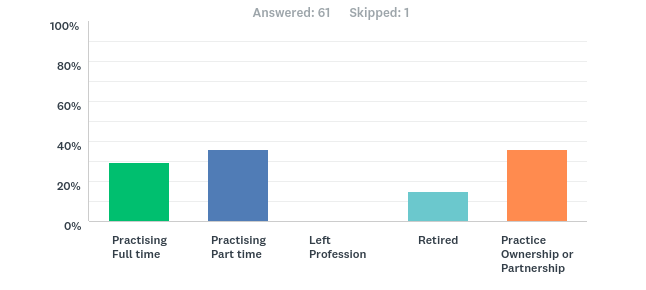
Associates – Current Job Classification

KookaburraSurvey2107AssociatesJobClassification

Where Do Associates Plan to be in 5 years’ time?

KookaburraSurvey2107Associatesfutureplans

Practice Owners – Current Job Classification

KookaburraSurvey2107PracticeOwnersjobclassification

Where Do Practice Owners Plan to be in 5 years’ time?

KookaburraSurvey2107PracticeOwnersfutureplans

© Copyright Kookaburra Veterinary Employment

24th July 2017

Logo

24/07/2017 |

2016 Salary Survey Results

Comments Off on 2016 Salary Survey Results

Kookaburra_Logo_transparent_stackedSome of the most common questions that we get asked at Kookaburra Vets relate to Salary levels. Thanks to all the vets who participated in our survey – the more vets who reply, the more useful this information is. We hope that in future years more of you will take the small amount of time required to complete our survey. We asked for full time annual salary range not including Super.

Minimum pay rates and conditions are set in the Animal Care and Veterinary Services Award, which you can find using Google, or at https://www.fwc.gov.au/documents/documents/modern_awards/award/ma000118/default.htm

Results

( as of 8th April 2016 – 255 Respondents)

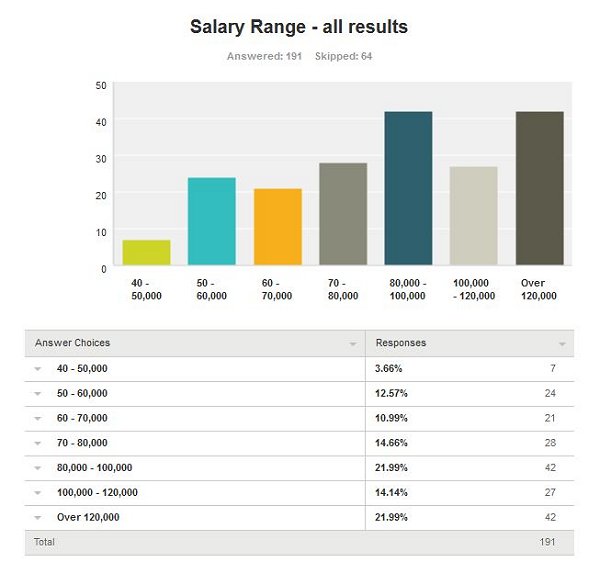
Kookaburra-survey-all-results

Locum Rates

Hourly rates for locums and casual vets. There was no statistical difference between vets working in mixed, equine and small animal practice. Rates below $30 an hour were excluded as likely to be permanent part time rates.

Total Number of Responses       79
Average rate (mean)                     $53.40
Minimum                                           $33
Maximum                                          $75
Median                                               $55

Small Animal Practice

Kookaburra-survey-smallanimal

Kookaburra-survey-smallanimal-table

Mixed Practice

Kookaburra-survey-mixedl

Kookaburra-survey-mixed-table

Equine Practice

Kookaburra-survey-equine

Kookaburra-survey-equine-table

Male vs Female Salaries

Kookaburra-survey-male-female-salary

Kookaburra-survey-male-female

Future Plans

Kookaburra-survey-associates-current

Kookaburra-survey-associates-5years

© Copyright Kookaburra Veterinary Employment

8th April 2016

Logo

11/04/2016 |

“Writing a Good CV” for Veterinarians

Comments Off on “Writing a Good CV” for Veterinarians

How to write a CVA Résumé, or CV (Curriculum Vitae), is vitally important to make a good first impression, and secure an interview.

It should be:

  • Easy to read
  • Include all relevant information
  • Accurate

An employer wants to know your name and contact details, what level of experience and qualifications you have and what additional skills you can bring to the practice to make you a valuable employee.

How to lay out a CV

Your CV should be easy to read so that a potential employer can quickly find the information they are looking for.

  • Use clear headings
  • Line things up! – use tabs
  • Use bullet points or numbered lists
  • Use a standard format throughout your CV – make it match
  • When listing things in date order, put the most recent first
  • Use a clear font – don’t use a handwriting or ‘fun’ font
  • Don’t use a large font – 10 or 11 is fine
  • Optimum 2 to 3 pages long
  • Do a Spell Check and a Grammar Check!

You can use a Résumé Template to give you a hand, but make sure you delete any irrelevant information.

Major Headings

  1. Contact Information and Personal Details
  2. Qualifications/Education
  3. Skills / Personal Statement
  4. Previous Employment
  5. Undergraduate Work Experience
  6. Undergraduate or Non-Veterinary Employment
  7. Continuing Education
  8. Personal Interests
  9. References
  10. Additional Sections
  11. Photograph
  12. Once you’ve written your CV, DO A SPELL CHECK!

1.      Contact Information and Personal Details

Include your full name, address, contact telephone number and email address. If your Visa status or Nationality will have a bearing on your suitability for work (eg overseas qualified vets) you can include it here.

2.      Qualifications/Education

Don’t include too much detail. List the most recent first ( reverse date order). New grads can include school details but for vets qualified several years it isn’t necessary.

3.      Skills or Personal Statement

Use this section to list your skills and competencies, veterinary interests, and career aspirations. Sell yourself!

Why Should we hire You?

4.      Previous Veterinary Employment

List previous veterinary employment with the most recent first ( reverse date order). Make it easy to read and to see dates. If there are any dates where you were travelling for example, or took a ‘career break’ for any other reason, include those details too. Do elaborate (briefly) on your actual duties and any specific skills acquired.

If you have been graduated for a long time and worked at many clinics, only give additional details for the most recent.

If you have locumed for a while, you don’t need to list all your locum jobs – just give a brief summary.

5.      Undergraduate Work Experience

This only applies to new graduates, and is extremely important. List the most recent first. List the clinics that you have seen practice at, and for how long. Describe the clinic, and give a brief description of the skills that you learnt while there.

6.      Undergraduate or Non-Veterinary Employment

It’s only worth including this if you’re a new grad, or if the type of work you have done is particularly relevant to the veterinary jobs you are now applying for.

Writing a CV

7.      Continuing Education

This section is extremely important, and becoming more so as the various Vet Boards start to enforce a requirement to complete a set amount of continuing education each year. Put the most recent first.

8.      Personal Interests

Yes, this is important! Vets need to be well balanced individuals to cope with the stresses of their work life.

9.      References

If you have a written reference, attach it to your CV. Please include full contact details for your referees – nothing is more annoying than having to look them up!

It can be difficult for new graduates to get references, however, it is worth asking the practice principal where you have had most work experience to write you a reference, or be listed as a referee.

10.      Additional Sections

In addition to the basics, you may want to include more information. Put extra info between the Continuing Education, and Personal Interests sections. Examples could include professional memberships & subscriptions, and additional useful skills, including technical/computer skills, languages, community activities, volunteer experience, Awards received.

11.      Photograph

It’s a hard question, whether or not to include a photograph of yourself on your CV. Generally, if you’d like to include a photo, just use a regular passport style photo.

And Finally – DO ANOTHER SPELL CHECK!

You're Hired

Author:

Wendy Nathan
Kookaburra Veterinary Employment

This information includes the views and opinions of Kookaburra Veterinary Employment and is of a general nature only. Factual information is believed to be correct at the time of writing, however, should not be relied upon and any person should confirm details with the relevant authorities and through their own research prior to acting on any of the suggestions in this article.

09/08/2021 |
© Vet Suppliers Directory 2019. Vantage Theme – Powered by WordPress.
Skip to toolbar