Blog

Ten Top Tips for Advertisers

Comments Off on Ten Top Tips for Advertisers
"Top Ten" image

There is a lot of competition between clinics to fill practice vacancies for vets and vet nurses at the moment. These are Paula’s Ten Top Tips to consider when advertising:

  1. Boost your extramural studies program: you may pick up a new graduate vet;
  2. Have a strong vet nurse team: boosting the role of your nurses makes your practice more attractive to potential applicants;
  3. Reply promptly to applicants: communicate in a timely manner;
  4. Sort out your social media: applicants are looking for practices with a strong online presence;
  5. Put your team online: pictures of your happy, sociable team can play a role in attracting applicants;
  6. Give everyone a lunch break: this will impact on your team’s work/life balance and outlook on their job;
  7. Undertake regular social activities: encourage your team to be socially engaged with each other and their community;
  8. Promote your location: applicants are looking for somewhere they can settle so provide them with reasons why for your area;
  9. Talk openly about the full benefits package: advertise your salary range on offer; and
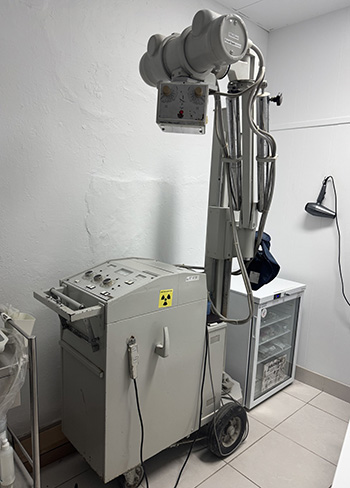
  10. Pictures of equipment are to be avoided: this is unlikely to attract applicants as most practices use similar equipment.

My current rule of thumb is to take the emphasis in the ad off what you want from your new employee and instead put it on what you are offering.

Author:

Paula Strong
Kookaburra Veterinary Employment

This information includes the views and opinions of Kookaburra Veterinary Employment and is of a general nature only. Factual information is believed to be correct at the time of writing, however, should not be relied upon and any person should confirm details with the relevant authorities and through their own research prior to acting on any of the suggestions in this article.

08/12/2020 |

Tax Rules for Working Holiday Makers

Comments Off on Tax Rules for Working Holiday Makers

News Flash imageAre you an employer of a Working Holiday Maker (visa subclass 417 or 462 holders)? If so, the way that you withhold tax has changed from 1st January 2017, and you have to register with the ATO. For more information, go to https://www.ato.gov.au/business/registration/work-out-which-registrations-you-need/taxation-registrations/employer-registration–working-holiday-makers/

The tax rate for Working holiday makers is now 15%.

02/02/2017 |

Superannuation – Australia

Comments Off on Superannuation – Australia
Piggy Bank

Superannuation is money put aside and saved while you’re working, to provide an income later in life when you retire.

From 1 July 2025, the super guarantee rate rose from 11.5% to 12%. The concessional contributions cap remains stable since 30 June 2024 at $30,000. Employees who think superannuation hasn’t been paid can make a complaint to the ATO.

The Superannuation Guarantee

In Australia, Employers must pay Super (the Super Guarantee) for

  • employees 18 years
  • employees under 18 years working more than 30 hours a week.
  • some contractors paid primarily for labour, even if they have an ABN

Temporary residents are also eligible for superannuation.

The Super Guarantee is currently 12% of ordinary time earnings (OTE) – this includes some bonuses, allowances, some paid leave, but not generally overtime. It has increased by 0.5% each year since 2021 up to 12% from July 2025 onwards. Employers are obliged to contribute this minimum percentage but they can contribute more. Full time, part time, and casual employees are all included.

SuperStream

Up to 30 June 2026, contributions must be made on at least a quarterly basis, by the quarterly due dates. Employers must pay and report super electronically in a standard format, meet SuperStream requirements and pay into a complying super fund.

If not paid on time, the super guarantee charge may be payable. An employee’s super contribution is counted as being paid on the date the fund receives it, not the date a clearing house receives it. This means that if a quarterly payment is due on 28th October for example, payment may need to be made up to 10 days prior.

If the accounting system used by the employer is not SuperSteam compliant, small businesses (19 or fewer employees) can use the free Small Business Superannuation Clearing House. There are also other commercial options, or use a clearing house provided by your Super Fund.

As part of the Payday Superannuation initiative, from 1 July 2026 employers will be required by law to pay their employees’ super concurrently with their salary and wages.

The ATO’s Small Business Superannuation Clearing House (SBSCH) will be closed on July 1, 2026, as part of this reform. While existing users will retain access until 30 June 2026, new registrations will not be accepted after 1 October 2025.

Contractors

Many Vets work as contractors, have an ABN (Australian Business Number) and invoice clinics for their work. However, for Superannuation purposes, they may still be considered an employee and entitled to the Super Guarantee from their employer if they are paid under a verbal or written contract that is mainly for their labour (more than half the dollar value of the contract is for their labour), perform the work personally, and are paid for hours worked, rather than to achieve a result. Their earnings amount is not relevant.

To work out whether super applies in your situation, use the following link to the relevant section of the ATO website at https://www.ato.gov.au/businesses-and-organisations/super-for-employers/work-out-if-you-have-to-pay-super/super-for-independent-contractors

Temporary Residents

Temporary Residents ARE both entitled to accumulate superannuation and also to receiving the Super Guarantee from employers. This includes Working Holiday Makers.
When Temporary Residents leave Australia, they may be entitled to claim the super paid for them back, as a DASP – Departing Australia superannuation payment. For more information visit https://www.ato.gov.au/Individuals/Super/In-detail/Temporary-residents-and-super/Super-information-for-temporary-residents-departing-Australia/

New Zealand citizens are not eligible for a DASP. However, New Zealand residents or citizens may be able to transfer any Australian superannuation they have accumulated to a KiwiSaver scheme provider or have it directly paid to themselves if eligible. This includes any unclaimed super money held by the ATO. Refer to the following link for more information Trans-Tasman Retirement Savings Transfers

Additional Contributions

You can add your own money into your super savings, and low or middle income earners may be eligible for government co-contributions.

Employees can initiate a salary sacrifice arrangement with their employer (pre-tax), or make their own personal contributions. There is a cap on Concessional contributions (which includes Super Guarantee payments from your employer), of $30,000.

Advantages of adding additional contributions to your super fund include increases to your superannuation balance. In addition, all non-concessional contributions are classified as ‘tax-free’ components within a super account. Tax-free components are received completely tax-free upon withdrawal in all circumstances, including lump sum withdrawals, pension payments and when paid as a death benefit, regardless of the age of the member.

A downside of making concessional and non-concessional contributions into super is that these funds are inaccessible until you meet a superannuation condition of release, such as retirement or reaching age 65.

Tax on Super

Concessional Contributions – 15%

Concessional contributions to your super fund are generally taxed at 15% when they are received by your super fund. These are super contributions made before tax, and include super guarantee from an employer, salary sacrifice, personal contributions claimed as an income tax deduction. The cap on concessional contributions is $30,000 from 1st July 2024 – more than this attracts extra tax.

Non-Concessional Contributions – not subject to tax

These are super contributions made after-tax eg. spouse contributions or personal contributions not claimed as an income tax deduction. The cap on non-concessional contributions is $120,000 from 1st July 2024 – more than this may attract extra tax. Note these are not taxed when received into the super fund because the funds have already been taxed.

Keeping Track of Super using MyGov

Employees can nominate which Super fund they wish to have their contributions paid into – they should fill out a Standard choice form ( follow instructions on how to do so by clicking on the following link https://www.ato.gov.au/forms-and-instructions/superannuation-standard-choice-form ) and provide it to the employer. Employees can now create a myGov account https://my.gov.au which is a central portal to which you can link Medicare, Centrelink, Child Support, ATO (Australian Taxation Office), My Health Record & other government agencies. You need a fair amount of information in order to link all or some of these agencies to your account, so make sure you have all your paperwork handy.

Once done, you can see what Superannuation Fund accounts you have and keep track of them through the ATO link in MyGov. For more information on how to manage your superannuation using the MyGov app and/or ATO tools including locating any lost superannuation, please click on the following link. https://my.gov.au/en/services/work/currently-employed/superannuation/managing-your-super.

Stapled Super Funds

A stapled super fund is an existing super account linked, or ‘stapled’, to an individual employee so that it follows them as they change jobs. This is aimed at reducing account fees and avoiding new super accounts being opened every time an employee starts a new job. Employers should offer employees a choice of super fund and are subject to penalties if they do not meet their obligations for this. However, for employees who don’t choose a super fund (this may include contractors), or who may not be eligible to choose a super fund (for example, temporary residents or employees covered by a relevant enterprise agreement), the employer should request the stapled super fund details for an employee from the ATO using ATO Online services. This has been a requirement since 1st November 2021. There are certain steps to make a stapled fund request. For more information visit the ATO website at https://www.ato.gov.au/businesses-and-organisations/super-for-employers/setting-up-super-for-your-business/offer-employees-a-choice-of-super-fund/stapled-super-funds-for-employers

More Information

For more information about all aspects of super for employers and employees, including how to find lost super, visit https://www.ato.gov.au/Super/

Author:
Scarlett Aston
Kookaburra Veterinary Employment

This information includes the views and opinions of Kookaburra Veterinary Employment and is of a general nature only. Factual information is believed to be correct at the time of writing, however, should not be relied upon and any person should confirm details with the relevant authorities and through their own research prior to acting on any of the suggestions in this article.

10/12/2025 |

Sound Veterinary Equipment – Time to update your old Patient Monitor?

Comments Off on Sound Veterinary Equipment – Time to update your old Patient Monitor?

When considering a new patient monitor you need to know it is designed and built for animals. Gone are the days of using human monitors on small animals. Mindray Animal is dedicated to developing the best patient monitors possible, capable of being used over a wide range of species.

Visit our website to see the range of patient monitors, from hand-held, palm held, Vetal, uMEC or ePM series – there is a monitor suitable to meet your needs.

Want to network or travel with your monitor? The Benevision series offer modular design and WiFi capable monitors that connect directly to Central Monitoring solutions – offering patient management and remote viewing via tablet & smartphone.

Contact us today 1300 881 681


        www.soundvet.com.au          contact@soundvet.com.au

16/05/2025 |

Sign up to VetCheck 24/7 and Save!

Comments Off on Sign up to VetCheck 24/7 and Save!

Vet Nurse triage service for Veterinary Practices

Delivering a professional after hours (or anytime) service to your pet owners just got easier. Divert your calls to the vet nurse triage service trusted by practices across Australia and New Zealand.

Why VetCheck 24/7 is the one to choose?

With VetCheck 24/7 you have a professional team of over 60 qualified and experienced vet nurses ready to take calls on your behalf, day or night. They have experience in all species including large and farm animals, wildlife, exotics and small companion animals.

They will triage your clients needs and resolve the issue themselves if possible. If the advice of a vet is required, they will book a Medechat video consultation with one of our qualified and experienced VetCheck veterinary professionals. If it is a true emergency, they will contact your on-call vet or refer your client to your preferred emergency clinic.

We can even take payment on your behalf before your on-call vet attends so they don’t have the stress of discussing payment with an emotional pet owner. It also ensures that you get paid.

Your pet owners will benefit from being able to access free advice after hours from our vet nurses and will only incur a cost if vet advice is actually needed.

How does it work?

Diverting your calls to VetCheck 24/7 means that your clients are always calling your practice.

We have found that on average 70% of calls can be dealt with immediately by our vet nurses reassuring pet owners until they can be seen at your clinic the next day

10% of the time we find a Medechat tele-health consult with one of our team is appropriate (so your on-call vet can rest!). In these instances we charge the pet owner directly. If desired, these can be by your own vets (at whatever fee you’d like to charge your client).

20% of the time it is a genuine emergency where we take custom instruction from your clinic as to how best to get the pet seen.

If instructed to contact your on-call vet, it will always be the nurse calling, not the pet owner, along with the triage information gathered. Where your vets are stuck in surgery or out on call (calving etc) all our nurses will be aware so we can assist in resource management as well.

We can also charge call out fees on your behalf before your on-call vet attends. This could be all the time or just new clients or if instructed by the vet on call.

In all instances an email is sent through with a call log detailing who called, their contact details, reason for the call, recommendations and outcomes so you can follow up with your client the following day and continue with their pets care. With the vet consults there are full HEAP/SOAP notes available immediately after the consultation has ended.

Every month, you will be sent a summary so you can see how many calls the team have taken for you and what the results of the calls were.

Call 1300 361 469 or go to www.vetcheck247.com.au

15/11/2024 |
© Vet Suppliers Directory 2019. Vantage Theme – Powered by WordPress.
Skip to toolbar