Blog

Working as a Locum – Part 1

Comments Off on Working as a Locum – Part 1

To work as a locum, vets should have a minimum of 2 years’ experience, and preferably over 3 years for sole charge practices. Not only is locuming a great way to finance travel, it is also a good way to gain additional experience working with different people, in a wide variety of different conditions, and improve your veterinary skills.

photo of vetsIn major cities, although there are more clinics in a smaller geographical area, there is usually more competition for locum work, therefore to be assured of a constant supply of work, locums should be willing to travel – and you can miss out on amazing experiences if you don’t consider travelling to work in more rural and regional areas. Country jobs will usually supply accommodation and maybe a vehicle for work and private use, however, city practices very rarely supply either accommodation or a vehicle.

Locum vacancies can range from a single shift to 5 or 6 months’ work, and include full time and part time hours. Locums help cover for temporary staffing shortages, illness, periods of leave and holidays, and parental leave. Jobs can be advertised up to 4 months in advance, however, they can also be listed at very short notice (next day). On average, locum jobs listed with Kookaburra Vet Employment are to start within 1-2 months.

Work

Most clinics require a locum with a minimum of 2-3 years’ experience who doesn’t require direction for most clinical judgments, but who will ask for help if it’s required or if they get out of their depth. Surgical experience is necessary – you must be able to do at least routine surgery including desexings in a timely manner (ie. not take too long).

It can be important to stick to clinic protocols, within a perceived duty of care. Clinics may see a high proportion of particular types of cases – eg ticks; snake bite; poisonings – ask the regular vet before they go away if there is a clinic protocol or for any tips on these type of cases.

Record keeping is extremely important – the locum may move on, but the clinic owner or regular vet then has to continue with ongoing care. Make sure that your handwriting is legible, and you use any computerised system to keep comprehensive clinical notes. Locums should try to fit in with existing staff and not rock the boat!

Make sure that you stick to practice pricing – please don’t undercharge just because you perceive the practice prices to be excessive.

Try not to put things off until the regular vet gets back.

Conduct

Practices expect a locum to be honest, punctual, friendly, polite, and able to take direction if required without taking offence. Derogatory, sexist, and discriminatory behaviour and comments are absolutely not acceptable.

If a work vehicle, or a vehicle for private use is supplied, it should be kept clean on the inside (if not the outside!), and driven with due care and attention. Establish the protocol for paying for petrol before commencing work.

If accommodation is supplied, it should be left clean and tidy. Talk to the employer about any use of private items or groceries if you are staying in their own house BEFORE you use anything, and establish whether you are expected to replace any items used.

CVs and References:

You should be prepared to send your CV to clinics when you apply for a vacancy. It should contain up to date information and be accurate, particularly with up to date contact information for you including a mobile number preferably with a message bank. Include contact details for recent referees, and email addresses, particularly if your referees are overseas.

Contract

article-contract-signingdesigned-by-freepik-smallerAlthough practices and locums may not decide to formally enter into a contract, it is a good idea to set down terms of employment and working conditions in writing prior to the start of the locum period. Things to consider include:

  • Pay rate;
  • after hours remuneration;
  • days off;
  • overtime;
  • normal hours of work;
  • type of payment arrangement and when the vet is to be paid;
  • type of employment (casual employee, contractor);
  • Superannuation; GST;
  • Travel Costs;
  • Professional registration costs;
  • Responsibility for keys – for the clinic and for scheduled drugs
  • Accommodation and responsibilities of the locum with respect to the accommodation and use of facilities if applicable (eg phone, internet, food in the pantry);
  • provision of vehicle for work – and private use – and fuel costs;
  • any provision for short term cancellation of the locum period by either party.

This list is by no means exhaustive. Contact the AVA HR Hotline for more information – 1300 788977 or email avahrhotline@whr.com.au  (you need to be an AVA member (Australian Veterinary Association).

Author:

Wendy Nathan
Kookaburra Veterinary Employment

This information includes the views and opinions of Kookaburra Veterinary Employment and is of a general nature only. Factual information is believed to be correct at the time of writing, however, should not be relied upon and any person should confirm details with the relevant authorities and through their own research prior to acting on any of the suggestions in this article.

03/11/2021 |

The Vet Shortage – Musings of an Employment Agent

Comments Off on The Vet Shortage – Musings of an Employment Agent

Kookaburra Vets LogoJanuary 2019

In the last 12 to 18 months, the veterinary shortage has continued to bite in Australia and is now affecting practices in the cities as well as rural and regional areas. The results of the Lincoln Institute survey in Australia have been in the news this month ( Link to SBS report) , and Kookaburra Vet Employment has recently been approached by multiple news outlets for interviews and comments ( link to ABC Sunshine Coast article )

A BVA (British Veterinary Association) and University of Exeter study in the UK released late in 2018 found that 37% of vets were actively thinking about leaving the profession (1,250 vets surveyed ). 59% of vets said they were either very stressed or somewhat stressed at work. A smaller Kookaburra Vet Employment survey from 2017 of just 336 vets showed that 17% of associates thought they would have left the profession in the next 5 years.

The suicide rate of vets in Australia has been found to be 4 times higher than the general population – that’s one vet every 12 weeks. Here at Kookaburra we feel the impact of losing a veterinary colleague way too frequently.

Male VetSo is there a shortage of vets – and is it due to vets quitting the profession?

In absolute terms looking at the widely reported figures in Australia, NZ, the UK and the USA for numbers of vets compared to numbers of pets – no, there shouldn’t be a shortage. So why are there so many veterinary vacancies? There are between 11 and 12,000 vets registered in Australia, and there are approximately 2,200 veterinary practices.

This time 5 years ago, in 2014, Kookaburra Vet Employment had 170 jobs listed for vets, and 20% of those jobs were suitable for new graduates (the clinic could provide the support and training needed for a new or recent grad). It was taking 8-9 weeks to fill a vet job.

At the moment (January 2019) Kookaburra Vet Employment has 437 current vet jobs listed, and 34% of those will now consider a new graduate. Vacancies are being listed for an average of 13 weeks. However, in the last 3 months, 11% of vacancies listed with us have been removed because the clinic either gave up looking, or restructured their clinic staff to cope. Some practices on our books have been advertising continuously for over 3 years without filling their vacancy.

So what impact does pay rates have?

Kookaburra did a small survey (including vets and vet nurses) in 2018 and found that out of 167 respondents, 73% had not had a pay rise in the last 12 months.  Out of 235 respondents, 70 % said that a pay rise would make them reconsider if they were considering looking for another job, and 21% said that it may make them reconsider.
Most vets earn in the range of $60,000 to $90,000 pa.

Female VetAn interesting study, again from the BVA and University of Exeter, released in 2018, investigated gender bias in the veterinary profession ( link to BVA Employers’ Study 2018) . The profession is becoming increasingly feminised as more than 50% of recent graduates are female. The VetFutures study surveyed 260 employers and managers. 42% believed there was no gender discrimination in the veterinary profession – but then that same section when tested in the survey offered males a higher salary than females. Could the feminisation of the profession be linked to stagnating pay rates?

As an employment agency we hear from both employers and job seekers.

For employers, retaining suitably qualified staff seems to be a challenge, however, we have found that very many clinics have expanded dramatically over the last 10 years or so, and have sought to employ more vets. Do they really have an increased workload and associated practice income, or are they trying to create a better work/life balance? Without an increase in practice income, new vacancies cannot be supported. Kookaburra has also seen a number of new practices set up in areas already well supplied by vets – including private practices, house call practices, as well as corporate practices and in-pet store clinics.  This has seemed to outstrip closure of clinics.

Associate vets are looking for a practice where they are paid well according to the work they do, where they know their work is valued by colleagues and clients, where they have accessible role models and mentors, access to and support for continuing education, a good work/life balance, and a modern well equipped workplace with trained supportive staff. Practices that provide this are likely to have less trouble recruiting, and more success at retaining the staff in whom they have made an investment.

Author:

Wendy Nathan
Kookaburra Veterinary Employment

This information includes the views and opinions of Kookaburra Veterinary Employment and is of a general nature only. Factual information is believed to be correct at the time of writing, however, should not be relied upon and any person should confirm details with the relevant authorities and through their own research prior to acting on any of the suggestions in this article.

22/01/2019 |

Vet Nurses Vs Vet Techs – What’s the Difference?

Comments Off on Vet Nurses Vs Vet Techs – What’s the Difference?

Vet TechMany veterinary practices in Australia are feeling the pinch of the manpower shortage, putting vets under more pressure and contributing to dissatisfaction with work life balance and mental health problems.

So, maybe you need a Vet Tech at your clinic.

Veterinary Nursing qualification

In Australia, the current Australian national qualification for vet nursing is Certificate IV in Veterinary Nursing, which takes from 18 months to 2 years to complete. The Diploma in Veterinary Nursing is then an additional qualification following on from the Cert IV, for 12 months, in 3 different streams, General Practice, Surgical, and Emergency & Critical Care

Veterinary Technology qualification

Veterinary Technology is a Bachelor’s degree taking 3 years (full time), which can incorporate and extend the Cert IV in Vet Nursing. It’s offered by Charles Sturt University,   The University of Queensland,  and the University of Adelaide, (and by Massey University in New Zealand, however, this isn’t yet included in the list of Vet Tech degrees eligible for the new Australian Veterinary Nurse and Technician (AVNAT) Registration Scheme)

Information provided by CSU and the University of Queensland about their Veterinary Technology degrees suggest there is more development of skills in critical thinking and problem solving, preparation for supervisory and management roles, as well as knowledge of a wider range of animal species and knowledge and professional skills in animal management, technology and welfare that can be used beyond the clinical setting. However, extended clinical support procedures are also taught. The first cohort from CSU graduated at the end of 2018.

The University of Adelaide degree will commence with its first intake in 2020. Information provided by the University suggests the program will have a strong practical component with students performing almost 500 hours of hands-on clinical experience in a veterinary workplace and in the University’s on-site clinics and diagnostic laboratories, and could equip students with specialist expertise in one or more areas including small animals; anaesthesia; imaging; equine; farming; or practice management.

How could employing a Vet Tech help?

Some clinics, emergency and critical care hospitals, and specialist centres in Australia are already using a very effective tiered system of support staff, from kennel hands and specific customer support staff/receptionists, through trainee veterinary nurses, veterinary nurses, diploma qualified VNs, degree qualified veterinary technicians, and practice managers. This means that Veterinary Surgeons gain the time to do the work that only they are qualified for.

This tiered system can also provide a structured career path for support staff, which can improve job satisfaction. Whilst attention is finally becoming focussed on the challenges for vets surrounding mental health awareness, life balance, burnout, compassion fatigue, job satisfaction, and decisions to quit the profession, we mustn’t forget there are similar challenges for our support staff.

So, rather than trying to employ another Vet in a very tight market, could this be a solution for some clinics?

  1. Employing a Veterinary Technician to help alleviate the heavy workload on vets, allowing vets to manage their Veterinary Surgeon duties more effectively
  2. Which may lead to happier vets and better retention of vets in your practice
  3. And even allow a pay rise for your vets, further contributing to better retention of vets

References:

Charles Sturt University
https://futurestudents.csu.edu.au/courses/animal-vet-sciences/bachelor-veterinary-technology

University of Queensland
https://future-students.uq.edu.au/study/program/Bachelor-of-Veterinary-Technology-2387

University of Adelaide
https://www.adelaide.edu.au/degree-finder/bvt_bvettech.html

Massey University
http://www.massey.ac.nz/massey/learning/programme-course/programme.cfm?prog_id=93432

Veterinary Nurses Council of Australia
https://www.vnca.asn.au/membership/recognised-qualifications/


Author:
Wendy Nathan
Kookaburra Veterinary Employment
updated 30th July 2019

This information includes the views and opinions of Kookaburra Veterinary Employment and is of a general nature only. Factual information is believed to be correct at the time of writing, however, should not be relied upon and any person should confirm details with the relevant authorities and through their own research prior to acting on any of the suggestions in this article.

21/05/2019 |

2nd Hand Veterinary Items Wanted

Comments Off on 2nd Hand Veterinary Items Wanted

We are now beginning the process of fitting out the WildHaven Wildlife Hospital and are hoping to source good-quality second-hand veterinary equipment wherever possible.

In particular, we are looking for items such as:

  • WildhavenStainless steel consult and treatment tables
  • Wildlife-safe holding cages and carriers
  • Prep and procedure tables
  • Anaesthetic machines and vapourisers
  • Oxygen concentrators or oxygen equipment
  • IV fluid pumps and syringe drivers
  • Patient monitors
  • Heat mats, bair huggers or warming equipment
  • Procedure lights
  • Stainless steel benches, shelving and storage
  • Trolleys and instrument stands
  • Fridges or small medical/lab fridges
  • Scales, including small animal scales
  • General veterinary consumables or equipment that may no longer be in regular use

We’re willing to cover the shipping costs of any items.

We would be incredibly grateful for any assistance!

Please contact Paul.

Mobile: 0474 775 962
Email: paul@nqwildhaven.com

12/06/2026 |

2019 Salary Survey Results – Part 4 – Happiness

0

Kookaburra_Logo_stacked

HAPPINESS

This year, the veterinary shortage has continued to bite in Australia and is now affecting practices in the cities as well as rural and regional areas. The results of the Lincoln Institute survey in Australia has been in the news ( Link to SBS report) , and Kookaburra Vet Employment has been approached by multiple news outlets for interviews and comments ( link to ABC Sunshine Coast article )

A BVA (British Veterinary Association) and University of Exeter study in the UK released late in 2018 found that 37% of vets were actively thinking about leaving the profession (1,250 vets surveyed ). 59% of vets said they were either very stressed or somewhat stressed at work. A smaller Kookaburra Vet Employment survey from 2017 of just 336 vets showed that 17% of associates thought they would have left the profession in the next 5 years.

The suicide rate of vets in Australia has been found to be 4 times higher than the general population – that’s one vet every 12 weeks.

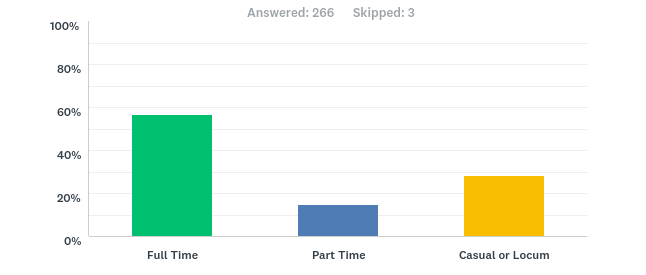
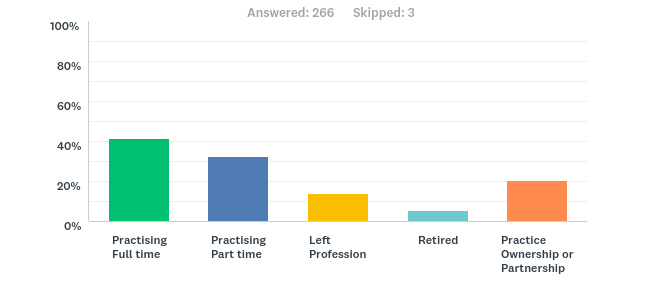
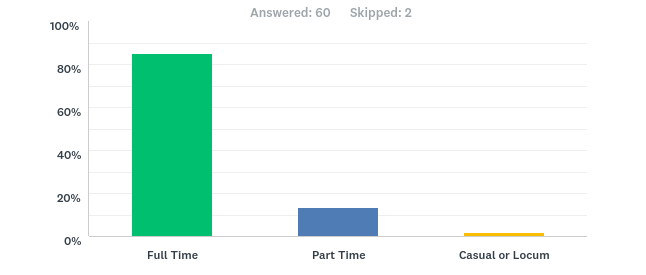
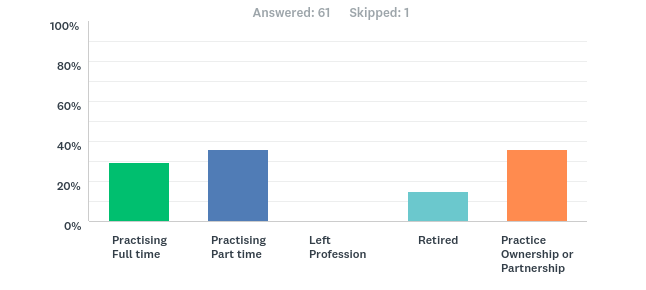
We included a question about future plans, and also a standardised question about happiness in this 2019 survey.

To download this Report as a printable pdf please click https://www.vetsuppliersdirectory.com.au/wp-content/uploads/2019/09/Salary-Survey-2019-part-4-Happiness.pdf

5 Years' time

Happiness

Comparing Various Subsets for Happiness

Interesting Statistically Significant differences (95% confidence level (p = .05), and >30 responses in each group)

  • 30.81% of vets in non-corporate practices were ‘Very Happy’, compared to only 16.75% of vets in corporate practices
  • 11.11% of vets in non-corporate practices were ‘Neither happy nor unhappy’, compared to 18.85% of vets in corporate practices
  • 33.3% of male vets were ‘Very Happy’, compared to 23.9% of female vets
  • 53.06% of Practice Owners were ‘Very Happy’ compared to only 21.06% of non – practice owners.

© Copyright Kookaburra Veterinary Employment

2nd September 2019

Logo

04/09/2019 |
© Vet Suppliers Directory 2019. Vantage Theme – Powered by WordPress.
Skip to toolbar