Light Box
Comments Off on Light Box
X-Ray Viewer in perfect condition
Price: $100
Located on the Gold Coast.
Contact Mermaid Waters Vet Surgery: mwvs4218@gmail.com
Phone: 0400 105 686
X-Ray Viewer in perfect conditionPrice: $100
Located on the Gold Coast.
Contact Mermaid Waters Vet Surgery: mwvs4218@gmail.com
Phone: 0400 105 686
Employing a locum vet can happen in a rush – but there are several things that an Employer in Australia should check prior to the locum starting work. This article is based on the “10 Things to ask your Locum Vet” factsheet written by Kookaburra Veterinary Employment.
1. Visa.An overseas vet should have a valid work Visa. It is an offence to employ someone without a valid work visa, so it’s the employer’s responsibility to check. Most overseas vets should have their passport with them or be able to provide details about their visa. See www.border.gov.au for more information. You can now check to see if a worker has work rights in Australia at www.border.gov.au/Busi/Visa – you should ask for consent to check the worker’s visa details first.
If a vet is going to be working for you as an employee, you will need their Tax File Number. See www.ato.gov.au for more information
If a vet says that they are self employed, they should provide you with their ABN – Australian Business Number. See www.ato.gov.au for more information, or consult your accountant for individual information about the best way for your practice to pay locums. Some locums are employed as casual employees, some locums are engaged as independent contractors. It’s likely that either way, the clinic will have to pay superannuation under the Superannuation Guarantee. There are Calculators online on the ATO website that help you work out whether your locum is an employee or a contractor, and in either case whether you should be paying superannuation for them. Keeping a record of your use of these calculators can support your decision if necessary.
Locum vets should be able to provide contact details for 1 or more recent veterinary referees. Clinics should make sure that any locums introduced to them have the required experience for a particular locum job. Kookaburra Veterinary Employment can provide CVs for all locums listed on their register – these CVs are provided by the locum vets to Kookaburra, and Kookaburra doesn’t provide any warranty as to the accuracy of any CV. We recommend that clinics take up one or more references for a locum prior to booking them for any work.
Following mutual recognition implementation in many States, you can now search for a particular registered veterinarian on the Australasian Veterinary Boards Council website at www.avbc.asn.au and find the State that they have primary registration with. It is good practice for vets to use their board registration number after their signature when signing certificates etc. See www.avbc.asn.au for information about registration of overseas qualified veterinarians.
NB: In Western Australia there is the requirement for a veterinary surgeon who appoints a locum to give written notice to the WA Vet Surgeons’ Board of the name of the locum, and the period of the appointment before, or as soon as possible, after the appointment commences.
The practice insurer may cover all vets working at the practice, or the Locum vet may have their own PII. It’s a good idea to make sure that all your locums and employees have adequate cover. In South Australia this is a requirement for all vets registering with the SA Vet Board.
The locum vet may or may not be covered by the Practice workers compensation scheme – check with your Insurer.
The locum vet may have their own medical insurance or, if from overseas, may be covered by a reciprocal agreement with Medicare.
For example, some States require vets to be licensed to use Radiation equipment. Vets may also need to be registered or licensed to perform other duties such as microchipping, preg testing, certification for export etc.
Although practices and locums may not decide to formally enter into a contract, it could be a good idea to set down terms of employment and working conditions in writing prior to the start of the locum period. Things to consider include:

This list is by no means exhaustive. Contact the AVA HR Hotline for more information on 1300 788977 or email avahrhotline@whr.com.au (you must be an AVA member).
This information includes the views and opinions of Kookaburra Veterinary Employment and is of a general nature only. Factual information is believed to be correct at the time of writing, however, should not be relied upon and any person should confirm details with the relevant authorities and through their own research prior to acting on any of the suggestions in this article.
Some of the most common questions that we get asked at Kookaburra Vets relate to Salary levels. Thanks to all the vets who participated in our survey – the more vets who reply, the more useful this information is. We hope that in future years more of you will take the small amount of time required to complete our survey. We asked for full time annual salary range not including Super.
Minimum pay rates and conditions are set in the Animal Care and Veterinary Services Award, which you can find using Google, or at https://www.fwc.gov.au/documents/documents/modern_awards/award/ma000118/default.htm
Thank you to everyone who also submitted ideas for collection of other information for future surveys.
( 336 Respondents)

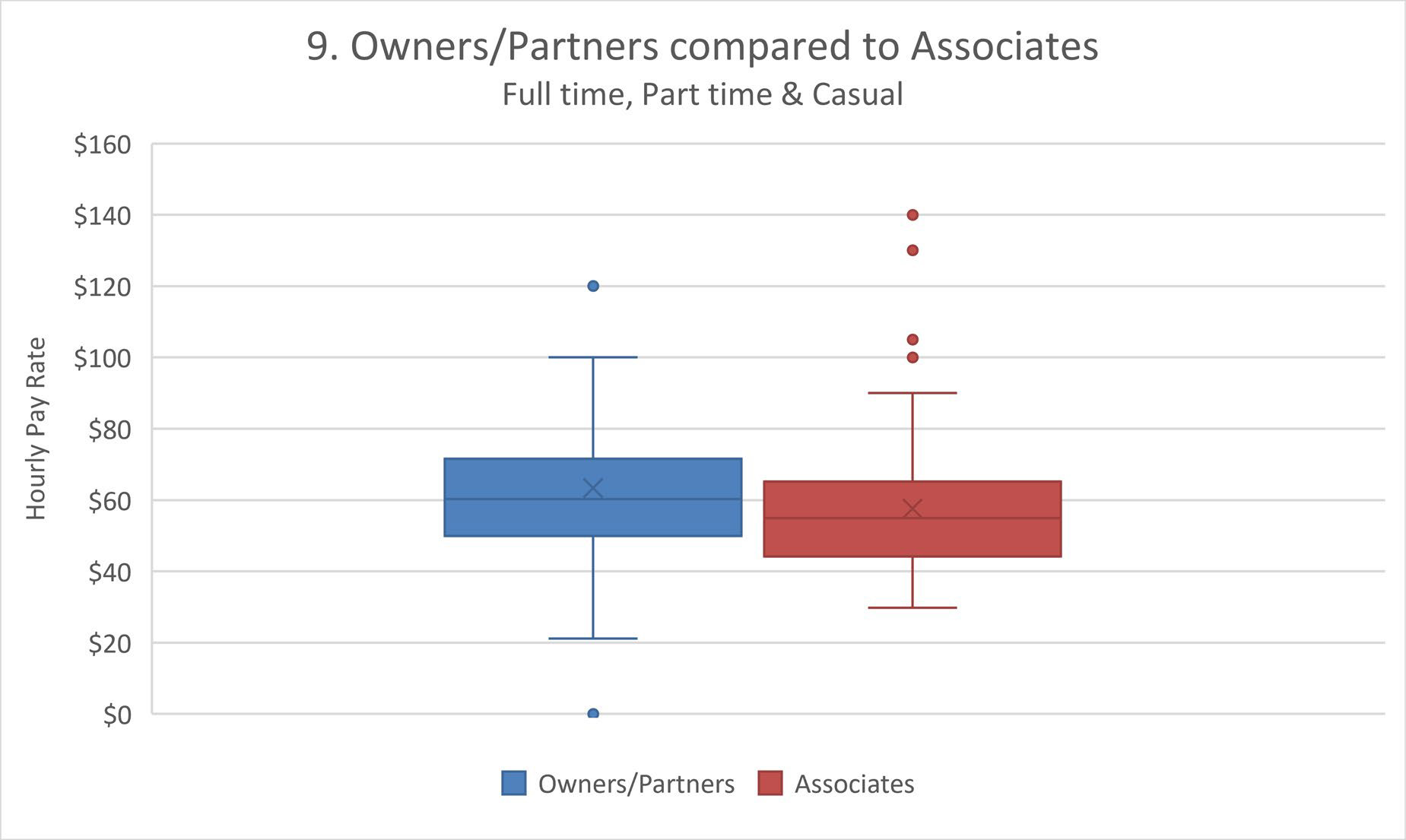
Hourly rates for locums and casual vets. There was no statistical difference between vets working in mixed, equine and small animal practice. Rates below $30 an hour were excluded as likely to be permanent part time rates.
| 2017 Results
Total Number of Responses 70 |
2016 Results
Total Number of Responses 79 |
Experience Range of Locum Vets:


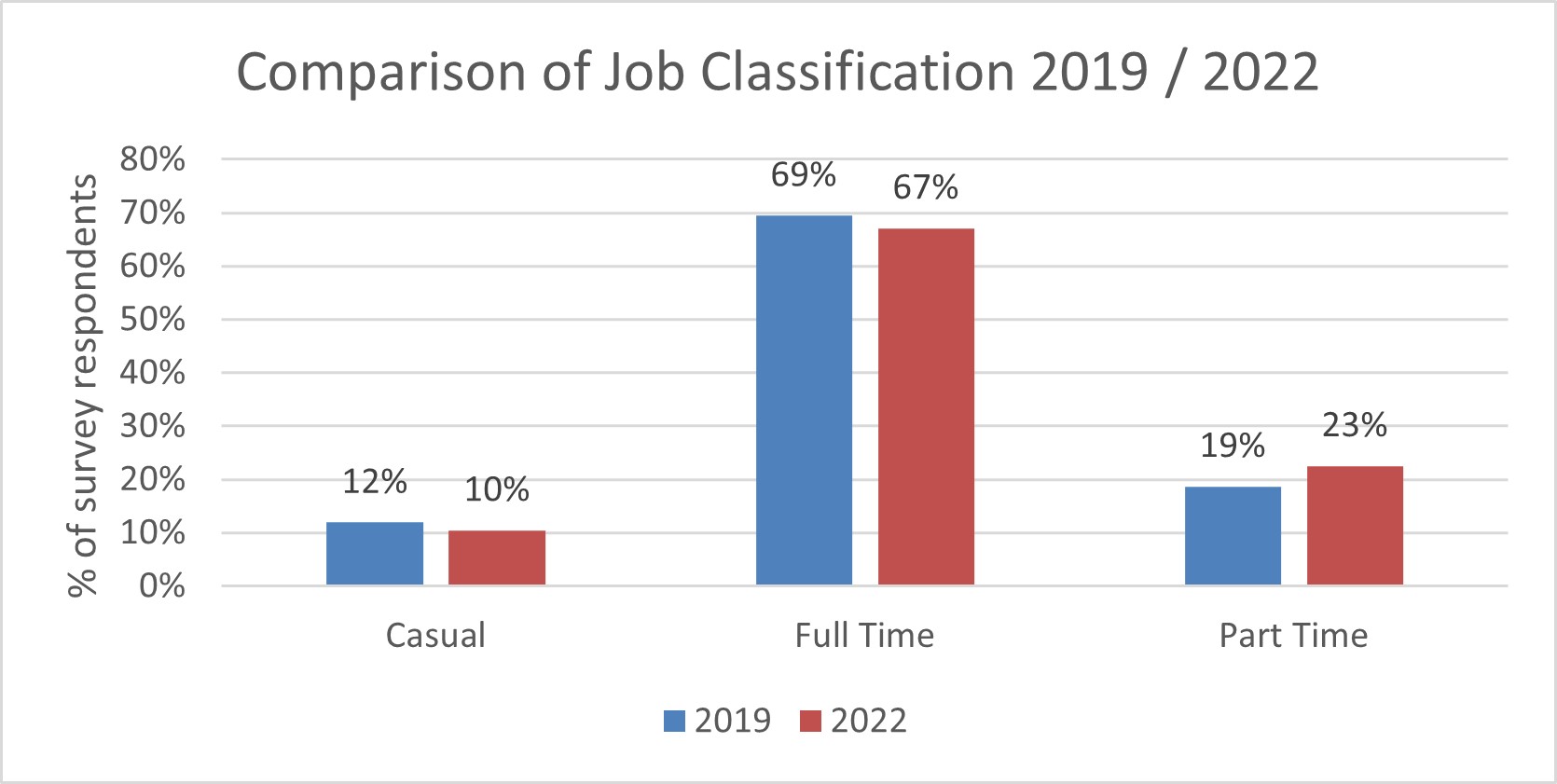
Associates – Current Job Classification

Where Do Associates Plan to be in 5 years’ time?

Practice Owners – Current Job Classification

Where Do Practice Owners Plan to be in 5 years’ time?

© Copyright Kookaburra Veterinary Employment
24th July 2017
With the AVA Annual Conference coming up, it’s a good time to release some current figures to update the trends that Kookaburra Veterinary Employment is seeing in Australia, for the “State of the Market” panel discussion.

Of the current 735 open vet vacancies, 131 have been continuously advertised for more than 8 months.
In the last 3 months (February, March, April 2023), 1125 jobs have been advertised.
As of 30th April 2023, 52 clinics had been advertising continuously for longer than 2 years without filling their vacancy

In March 2020 we had 236 vet nurse jobs listed.
In April 2021 we had 337 vet nurse jobs listed.
As of May 9th 2023, we have 316 vet nurse jobs listed.
Kookaburra has noted the following factors
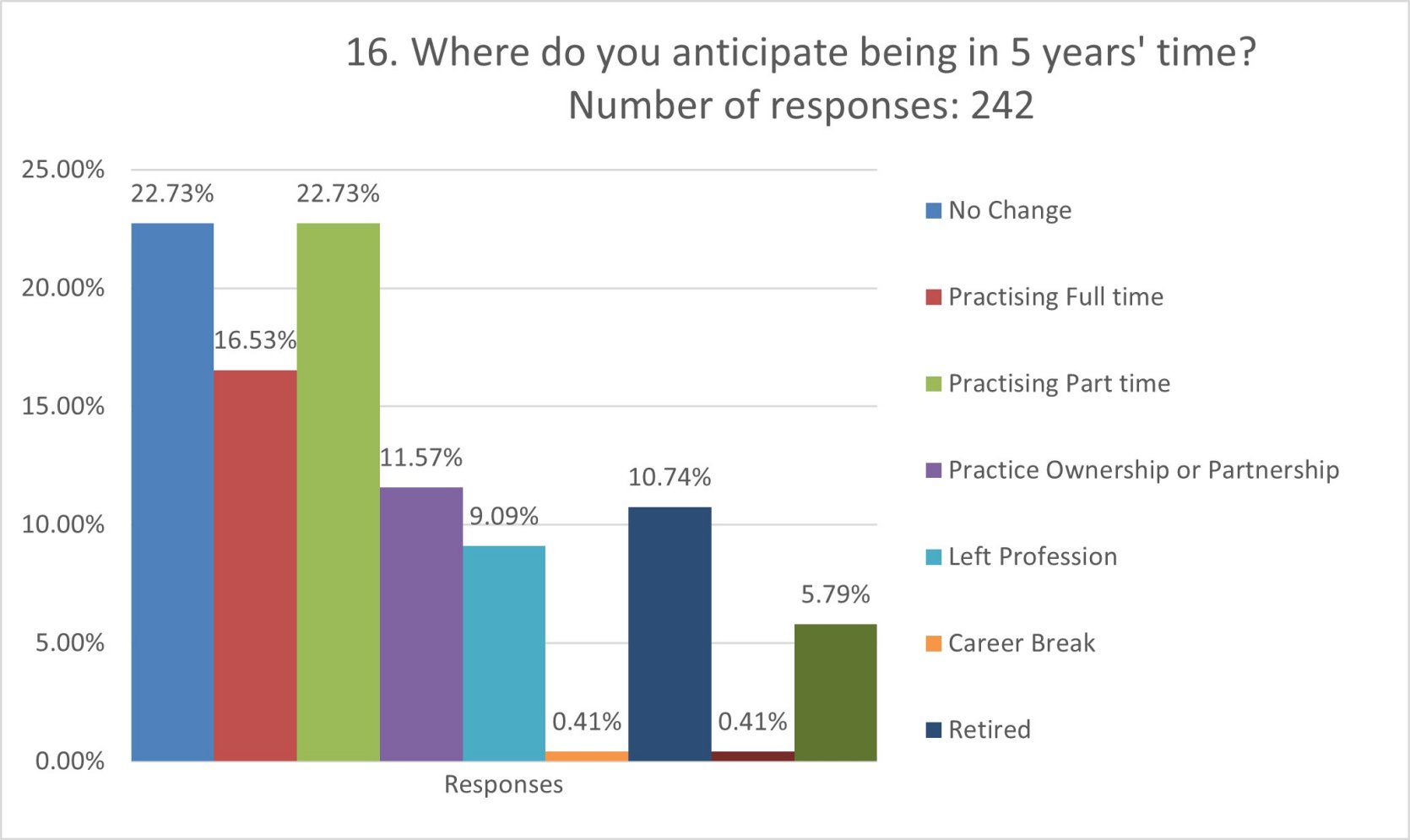
Kookaburra circulated a Salary survey in the winter of 2022 and one of the questions we asked was about future plans (see chart below).
26% of vets (63 vets ) who responded to the Kookaburra Vets Salary Survey 2022 said they were planning on leaving general practice by 5 years’ time, either retiring, leaving the profession entirely, taking a break, or moving into another area of the veterinary industry.
In the 2019 survey, 24% of responding vets (142 vets) were planning on leaving general practice by 5 years’ time. That’s a lot of vets leaving general practice – and it doesn’t seem to be slowing down at all.
(copy of the full Salary Survey 2022 report available here: https://www.vetsuppliersdirectory.com.au/salary-survey-2022/ )

Author:
Wendy Nathan
Kookaburra Veterinary Employment
This information includes the views and opinions of Kookaburra Veterinary Employment and is of a general nature only. Factual information is believed to be correct at the time of writing, however, should not be relied upon and any person should confirm details with the relevant authorities and through their own research prior to acting on any of the suggestions in this article.

Every time I visit the city, I have an amazing time – as a tourist – enjoying the nightlife, the amazing shows, music and events, marveling at the frequency of public transport, and the bustling vitality. And every time I leave, I’m so glad to be living my normal daily life in a regional area.
As an immigrant to Australia, I really feel I’m living the Australian Dream. I can afford a house, with a backyard, a dog, 3 cats (indoors of course). Rush-hour happens for 10 minutes when parents picking up from school queue to get on the roundabouts. I’ve lived inland, on acres, with horses, chickens, cattle, alpacas, a veggie garden, and at the coast, where it’s been a 2 minute walk to the beach and I frequently have the beach all to myself. I’ve always got to know and socialize with my neighbours and the local community. Despite having no actual family living nearby, my kids have grown up with an extended community family through all sorts of activities, in family day care, playgroup, sports, music, and then primary and high school, where we run into and keep in touch with the same families over and over again.
Shopping is easy as I can drop in to the shops on my way somewhere else – it doesn’t take long, and we choose from what’s available. And online shopping is our friend for anything we can’t get locally. Local business owners are members of our community.
There’s always a thriving arts and culture scene in regional areas – and it’s so welcoming. We make our own entertainment. I have sung in choirs, performed in local theatre, played in orchestras. Local sport of all types brings the community together.
Being a vet opened all of this up to me – we’re so privileged to be easily able to have this regional lifestyle due to our professional qualification, when many people find themselves unable to stay in regional areas once they’ve moved there, due to the lack of work opportunities.
If you’re thinking about moving to regional NSW, currently there’s a support package for essential workers, which includes employees in Veterinary services, which has come out of the recent Inquiry into the veterinary workforce shortage in NSW. For more information about The Welcome Experience, visit NSW Government | The Welcome Experience
This information includes the views and opinions of Kookaburra Veterinary Employment and is of a general nature only. Factual information is believed to be correct at the time of writing, however, should not be relied upon and any person should confirm details with the relevant authorities and through their own research prior to acting on any of the suggestions in this article.