 Australia, the UK, and New Zealand all have requirements for registered vets to keep up to date by recording a certain amount of continuing education. New Zealand and the UK have recently changed their focus from simply recording time spent on CE to actually evaluating and reflecting on the learning experience, in order to better support vets in practice, help vets find professional fulfilment, and to aid in retaining vets in the profession.
Australia
All Australian veterinary Boards have agreed, through the Australasian Veterinary Boards Council (AVBC) and the Australian Veterinary Association (AVA), on a minimum requirement of 60 CPD points over a consecutive 3 year cycle. At least 15 of the required 60 CPD points must be structured points. The remaining 45 points may be either unstructured points or more structured points. You may use the AVA Vet Ed points scheme to record and validate your CPD achievement
https://www.ava.com.au/education-events/veted/veted-points/
Structured Points: Most courses, conferences and seminars are 1:1 (points:hour) & Workshops are 2:1 and require validation (eg by certificate)
Unstructured Points: eg. private reading, un-assessed computer based courses are 1:2 (points:hour)
The registered veterinary practitioner who is currently undergoing formal post-graduate training with a view to the acquisition of a higher qualification in their chosen field of work or a related area of veterinary science, is considered to be fulfilling all the requirements for continuing education.
The points allocation table is available from the NSW Vet Board website:
https://www.vpb.nsw.gov.au/sites/default/files/images/GR05%20CPD%20Points%20Allocation%20Table.pdf
UK
All veterinary surgeons listed on the RCVS Register as practising members must complete the minimum CPD requirement of 35 hours per year, regardless of whether they are working full-time or part-time.
Vet Nurses on the RCVS Register have to complete 15 hours CPD per year.
The RCVS has an online system for veterinary surgeons (and vet nurses) to record their CPD activities (1CPD). 1CPD is a new outcomes focused CPD system, and is available as a web portal or as a mobile app. From January 2022 it has become mandatory for all veterinary surgeons to use 1CPD. Reflection on CPD outcomes, an integral part of 1CPD, is now also mandatory from 2022 and can be done using the 1CPD app.
RCVS: https://www.rcvs.org.uk/document-library/cpd-guidance-for-vets/
https://www.rcvs.org.uk/lifelong-learning/continuing-professional-development-cpd/getting-started-with-1cpd/
All vets practising in the UK, whether they graduated overseas or in the UK, must comply with the RCVS requirement of 35 hours per calendar year. You may include CPD undertaken abroad, but you should ensure that your description of this, and the hours involved, are clearly recorded in English so that the details of what you have done are transparent to, and understood by, the RCVS and others with an interest in your CPD record, such as prospective and current employers.
There is no restriction on the number of hours of self-directed learning that can count towards your CPD as long as you document it or reflect on your CPD. Ultimately, the judgement of what should count as CPD will vary for each individual, and it is therefore up to you to decide how best to fulfil your own learning needs.
PDP – Professional Development Phase
This was a requirement for newly qualified graduates and those with less than one year’s clinical experience, regardless of where they qualified in the UK or overseas. It could also be used by anyone returning to work after a career-break. Average time taken to complete the PDP is 18 months depending on caseload, but it needs to be completed within 3 years. PDP required exposure to a general practice workload. The last enrolment for the PDP was in June 2021. It has been replaced by VetGDP – Veterinary Graduate Development Programme.
VetGDP – Veterinary Graduate Development Programme.
This is a requirement for new veterinary graduates for any graduate vets employed from summer 2021 onwards – their employer must be signed up to VetGDP and there must be a VetGDP Adviser in the workplace to support them. It is focused on developing professional skills as well as clinical capabilities and is intended to be more supportive than the PDP. Vets who have been out of practice for 5 years or longer also have to take part in VetGDP. Overseas graduates who are new RCVS members who have less than one year of significant work experience as a veterinary graduate will be expected to enrol in the VetGDP. https://www.rcvs.org.uk/lifelong-learning/vetgdp/
New Zealand
The CPD requirements in New Zealand changed from 2021 onwards. 2021 was a trial year.
The previous CPD requirements focused on using points to quantify time spent on CPD activities, categorising activities and setting quotas that had to be met. This new framework departs from that approach and instead focusses on the process of planning, taking part in and evaluating learning. In simple terms, it requires that veterinarians must:
- Prepare a CPD plan
- Do CPD
- Record their CPD
- Review the CPD plan.
The requirements are different for new graduates in their first year of practice. This is to reflect that they have different needs as they adjust to professional life and the requirements for them focus more on collegial support in the form of mentoring. There is flexibility in who can act as a mentor. For many new graduates, the mentor will be their employer or supervisor at work. However, it could equally be someone independent. There are no qualification or training requirements for acting as a mentor.
The Vet Council hasn’t set a minimum amount of CPD that must be undertaken. “Our expectation is that veterinarians will take part in CPD, completing all of the four steps above, and that the amount of CPD they undertake should be appropriate to their needs. We recognise that some people appreciate having a clear number to work to, so, as a guide, we believe that veterinarians should aim to undertake at least 20 hours of CPD per year. This isn’t a strict requirement, and we won’t rigidly enforce it. We emphasise that the quality of CPD and the process of planning and evaluating it is of far more importance than the quantity.”
https://www.vetcouncil.org.nz/Web/Veterinarians/Continuing_Professional_Development.aspx
Author:
Wendy Nathan
Kookaburra Veterinary Employment
This information includes the views and opinions of Kookaburra Veterinary Employment and is of a general nature only. Factual information is believed to be correct at the time of writing, however, should not be relied upon and any person should confirm details with the relevant authorities and through their own research prior to acting on any of the suggestions in this article.


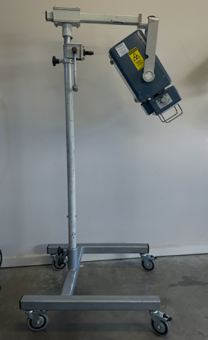 Well looked after Ecoray Ultra 100
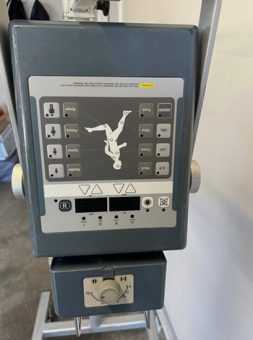 Price: $19,999 (Ex Gst)