We are now beginning the process of fitting out the WildHaven Wildlife Hospital and are hoping to source good-quality second-hand veterinary equipment wherever possible.
In particular, we are looking for items such as:
Stainless steel consult and treatment tables
Wildlife-safe holding cages and carriers
Prep and procedure tables
Anaesthetic machines and vapourisers
Oxygen concentrators or oxygen equipment
IV fluid pumps and syringe drivers
Patient monitors
Heat mats, bair huggers or warming equipment
Procedure lights
Stainless steel benches, shelving and storage
Trolleys and instrument stands
Fridges or small medical/lab fridges
Scales, including small animal scales
General veterinary consumables or equipment that may no longer be in regular use
We’re willing to cover the shipping costs of any items.
We would be incredibly grateful for any assistance!
From 1 July 2026 employers must pay superannuation contributions on payday, with funds received by the employee’s super fund within seven business days.
At the moment, employers need to pay employees’ super contributions at least every 3 months and into the employee’s nominated account. Under the new rules, employers will need to pay employees’ super contributions at the same time they pay their salary or wages so that the contributions reach the employees’ nominated account within 7 business days. There are some exceptions, for example the first super contribution for a new employee will need to be made within 20 business days of the salary or wages being paid.
Super guarantee is calculated as 12% of QE (Qualifying Earnings), which includes OTE (Ordinary Time Earnings) and other payments. The ATO is the primary enforcement agency for the compulsory super guarantee. The ATO is responsible for implementing the new rules and has prepared a fact sheet about the changes.
As a reminder about who should be receiving Super payments from their employer, in Australia, Employers must pay Super (the Super Guarantee) for
employees 18 years+
employees under 18 years working more than 30 hours a week.
some contractors paid primarily for labour, even if they have an ABN
Temporary residents (eg. working holiday makers) are also eligible for superannuation.
For more information about Superannuation in Australia, see our previous article published in December 2025 – Superannuation – Australia.
This information includes the views and opinions of Kookaburra Veterinary Employment and is of a general nature only. Factual information is believed to be correct at the time of writing, however, should not be relied upon and any person should confirm details with the relevant authorities and through their own research prior to acting on any of the suggestions in this article.
Comments Off on Emergency Animal Diseases Guide 2025 update
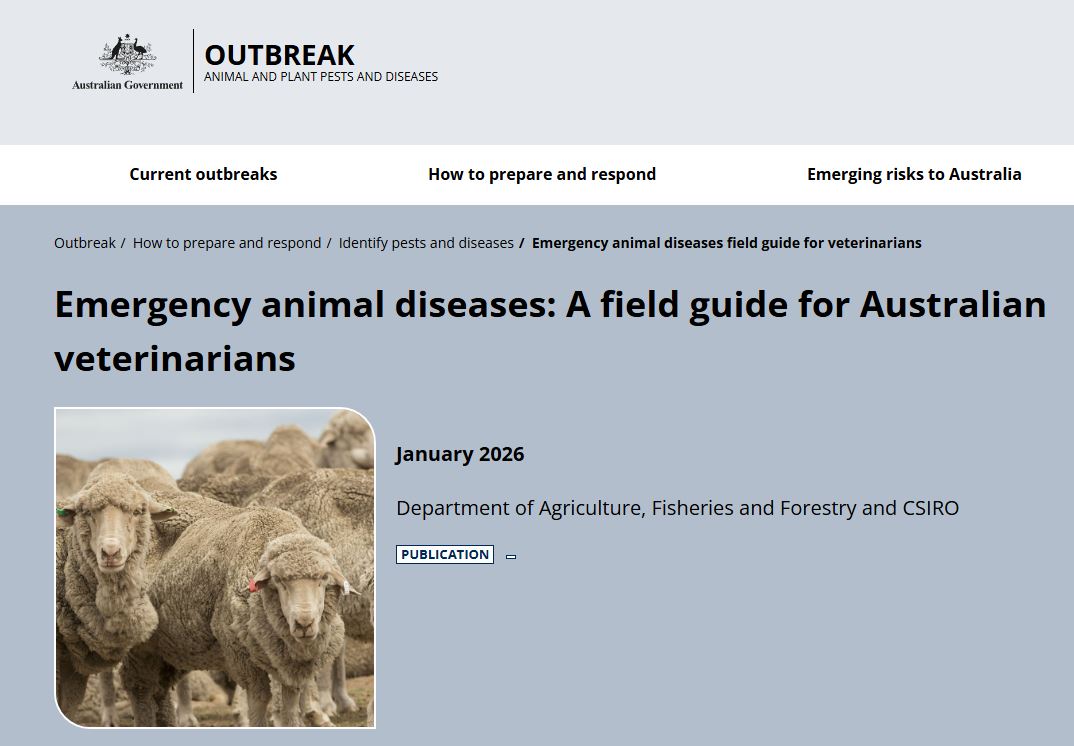
There is a useful resource for vets produced by the Department of Agriculture and Australia’s Animal Health Laboratory. The 2025 update includes new chapters on diseases and syndromes that have emerged or increased in importance since the previous edition.
The EAD field guide provides information on important emergency animal diseases that either are rare or do not exist in Australia, to help vets include appropriate EADs in their differential diagnoses. Early identification and reporting is critical to minimise harm and to identify currently high risk exotic diseases such as African Swine Fever.
There is also information on the Outbreak website about emerging diseases for vets to watch out for – which may be particularly useful for vets who are travelling Australia performing locum work, or who graduated overseas.
This information includes the views and opinions of Kookaburra Veterinary Employment and is of a general nature only. Factual information is believed to be correct at the time of writing, however, should not be relied upon and any person should confirm details with the relevant authorities and through their own research prior to acting on any of the suggestions in this article.


 Wireless Sectional DR
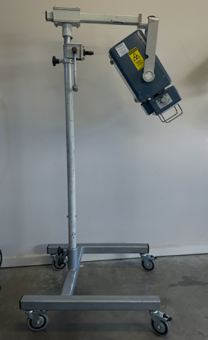 Well looked after Ecoray Ultra 100
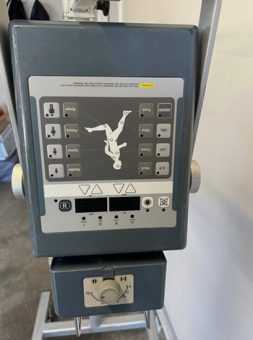 Price: $19,999 (Ex Gst)
 Stainless steel consult and treatment tables