Blog

2016 Salary Survey Results

Comments Off on 2016 Salary Survey Results

Kookaburra_Logo_transparent_stackedSome of the most common questions that we get asked at Kookaburra Vets relate to Salary levels. Thanks to all the vets who participated in our survey – the more vets who reply, the more useful this information is. We hope that in future years more of you will take the small amount of time required to complete our survey. We asked for full time annual salary range not including Super.

Minimum pay rates and conditions are set in the Animal Care and Veterinary Services Award, which you can find using Google, or at https://www.fwc.gov.au/documents/documents/modern_awards/award/ma000118/default.htm

Results

( as of 8th April 2016 – 255 Respondents)

Kookaburra-survey-all-results

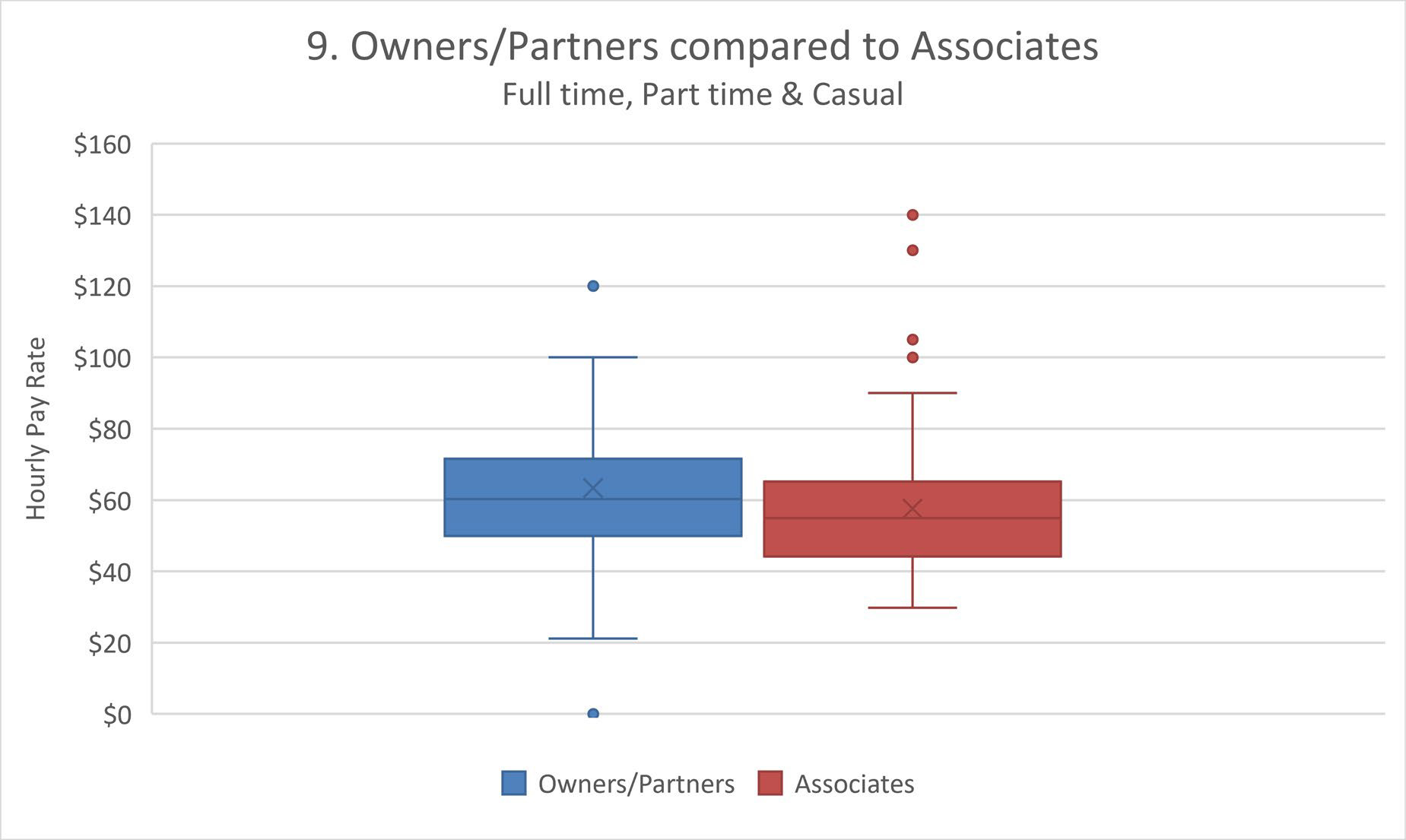
Locum Rates

Hourly rates for locums and casual vets. There was no statistical difference between vets working in mixed, equine and small animal practice. Rates below $30 an hour were excluded as likely to be permanent part time rates.

Total Number of Responses       79
Average rate (mean)                     $53.40
Minimum                                           $33
Maximum                                          $75
Median                                               $55

Small Animal Practice

Kookaburra-survey-smallanimal

Kookaburra-survey-smallanimal-table

Mixed Practice

Kookaburra-survey-mixedl

Kookaburra-survey-mixed-table

Equine Practice

Kookaburra-survey-equine

Kookaburra-survey-equine-table

Male vs Female Salaries

Kookaburra-survey-male-female-salary

Kookaburra-survey-male-female

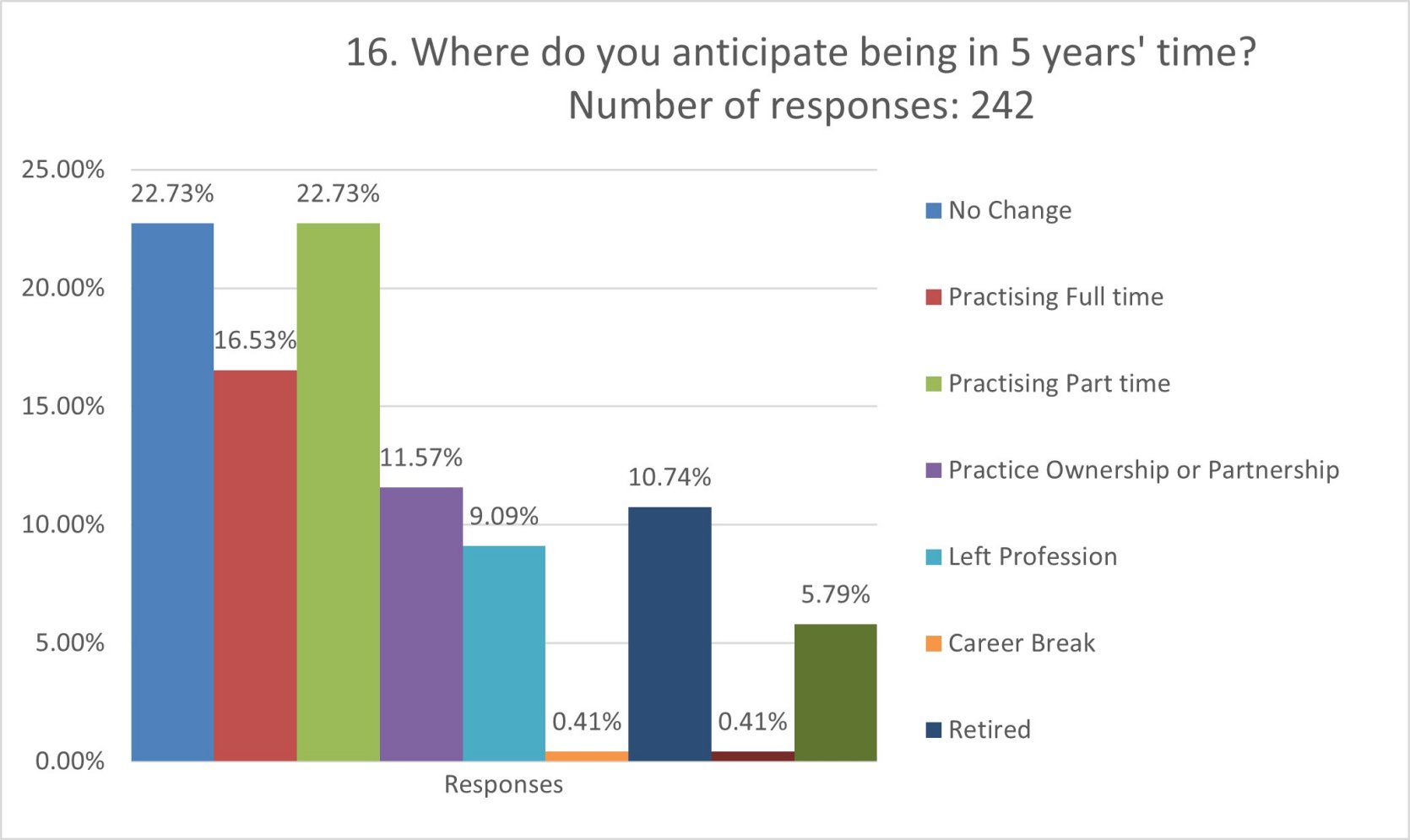
Future Plans

Kookaburra-survey-associates-current

Kookaburra-survey-associates-5years

© Copyright Kookaburra Veterinary Employment

8th April 2016

Logo

11/04/2016 |

How To Assess if your Online Ad is ‘working’

Comments Off on How To Assess if your Online Ad is ‘working’

Robots vs Humans: The Evolution of Online Advertising

Ever Heard of the Dead Internet Theory?

The “Dead Internet Theory” suggests that much of the content we see on the internet (including social media platforms) is actually created by artificial intelligence interacting with other AI. While it’s an exaggerated claim to say that all content is AI-generated, the idea that a significant portion of it could be is both intriguing and unsettling.

In fact, it’s estimated that 57% of web-based text content is AI-generated or translated as of now. Though experts initially predicted that 90% of online content would be AI-generated by 2025, it’s clear we’re moving toward a future where much of what we encounter online is the product of artificial intelligence. If you’re wondering whether you’ve been debating recipes with a robot on Facebook, well, it’s not that far-fetched!

Scrolling through your feeds can feel like a wild west of strange content—sometimes you might even stumble upon unexpected gems, like “Shrimp Jesus” making an appearance on your timeline.

But what does all this have to do with your online ad?

Clicks and Views: How Reliable Are They?

A common question we get is, “How is my ad performing?” Many people rely on total clicks or views as an indicator of success. But today, these metrics are increasingly unreliable. With over 70,000 AI companies scanning the web, bots are constantly harvesting data and triggering views—often in ways that skew results.

Bots such as Amazonbot, Bingbot, Googlebot, and Yahoo Slurp crawl the internet every day to index websites for search engines. These bots often follow the robots.txt protocol, a set of rules used by websites to control which pages they can crawl. But even when blocked, bots can bypass these restrictions by coming from third-party sites or simply ignoring the rules altogether, leading to what we call “botted views.”

Here are some examples of a robots.txt file used by Cloudflare and Stack Overflow – https://www.cloudflare.com/robots.txt (allows some crawling by specific instructions) and https://stackoverflow.com/robots.txt (allows no crawling for entire website).

But What About Human Views?

Even human interactions with your ad can be misleading. Consider these factors:

  1. Duplicate clicks: Someone might see your ad, show initial interest, and then return later to check it again. This can inflate your view count.
  2. Foreign applicants: If your ad is reaching people from outside your location (especially if you’re hiring in a country like Australia or New Zealand), it might attract applicants with foreign qualifications that require a lengthy recognition process. This results in a drawn-out recruitment cycle, which may not be ideal for your clinic.

So, how can you tell if your ad is truly reaching the right audience with just views?

Why Aren’t I Getting Applications?

Sometimes, even if your ad is getting human views, it might not be attracting quality applications. Here are a few reasons why:

  • Cumbersome application processes: If you’re using a careers portal with multiple steps (e.g., creating an account, uploading documents, filling in surveys), applicants may abandon the process in favour of an easier alternative. Make sure your application process is as straightforward as possible.
  • Unfriendly presentation: If your ad looks like a wall of text, potential applicants might be turned off. Instead, break down key details into short, bold bullet points to make it more skimmable and engaging. Highlight the most important points using bold or italics.

How Can I Tell If My Ad Is Actually Working?

If view counts and clicks are unreliable, the best way to assess your ad’s effectiveness is through human interaction. Are you receiving inquiries about the position via email, phone, or in-person? Applicants might not always send their resume immediately but could still be showing interest by reaching out for more information.

At the end of the day, it’s not about how many people see your ad—it’s about who is seeing it. Quality interactions matter more than quantity.

Author:

John Maude
Kookaburra Veterinary Employment

This information includes the views and opinions of Kookaburra Veterinary Employment and is of a general nature only. Factual information is believed to be correct at the time of writing, however, should not be relied upon and any person should confirm details with the relevant authorities and through their own research prior to acting on any of the suggestions in this article.

Learn More About Robots and Crawlers

Curious about web crawlers and the robots.txt protocol? Google offers some great resources on this topic. Check them out here: Google’s Robots.txt guide.

Want to Create Content Like a Bot and Usher in the Downfall of the Internet?

Interested in exploring AI-generated content? You can try out some popular tools:

  • SocialBee: Text generator with a free trial – SocialBee
  • Radaar: Text & Image generator with a 14-day free trial – Radaar
  • Adobe Firefly: Image generator (login required) – Adobe Firefly
  • Midjourney: Image generator (subscription-based) – Midjourney
17/02/2025 |

Working Holidaymaker Changes

Comments Off on Working Holidaymaker Changes

Visa pictureTemporary changes to the Working Holiday Makers Visa conditions may be of benefit to Vets currently working in Australia from overseas – and to their clinics!

From 19 January 2022 to 31 December 2022, the 6 month work limitation has been temporarily relaxed.

Until 31 December 2022, Working Holiday Makers ​no longer need permission from the Department to work for the same employer for more than 6 months.

This allows employers to retain trained staff.

Working Holiday Makers can work in any location, occupation or industry while in Australia. Under Condition 8547, work with any one employer is generally limited to 6 months. From 19 January 2022 to 31 December 2022 the 6 month work limitation has been temporarily relaxed. The Condition 8547 does not apply until after 31 December 2022.

Normally, Working Holiday Makers cannot stay in the same position in the same location with one employer for more than six months by using different employment agencies, business affiliates or sub-contracting arrangements. The 6 months starts from the day they start work. It includes full-time, part-time, casual, shift and voluntary work. It is based on the length of time that has passed since they started working, not how many hours or days worked. However, they do not need to ask (Immigration) permission to work with the same employer for up to 12 months if working in different locations and work in any one location does not exceed 6 months.

For more information visit the Home Affairs website: https://immi.homeaffairs.gov.au/visas/getting-a-visa/visa-listing/work-holiday-417/6-month-work-limitation

Author:

Wendy Nathan
Kookaburra Veterinary Employment

This information includes the views and opinions of Kookaburra Veterinary Employment and is of a general nature only. Factual information is believed to be correct at the time of writing, however, should not be relied upon and any person should confirm details with the relevant authorities and through their own research prior to acting on any of the suggestions in this article.

08/06/2022 |

Sign up to VetCheck 24/7 and Save!

Comments Off on Sign up to VetCheck 24/7 and Save!

Vet Nurse triage service for Veterinary Practices

Delivering a professional after hours (or anytime) service to your pet owners just got easier. Divert your calls to the vet nurse triage service trusted by practices across Australia and New Zealand.

Why VetCheck 24/7 is the one to choose?

With VetCheck 24/7 you have a professional team of over 60 qualified and experienced vet nurses ready to take calls on your behalf, day or night. They have experience in all species including large and farm animals, wildlife, exotics and small companion animals.

They will triage your clients needs and resolve the issue themselves if possible. If the advice of a vet is required, they will book a Medechat video consultation with one of our qualified and experienced VetCheck veterinary professionals. If it is a true emergency, they will contact your on-call vet or refer your client to your preferred emergency clinic.

We can even take payment on your behalf before your on-call vet attends so they don’t have the stress of discussing payment with an emotional pet owner. It also ensures that you get paid.

Your pet owners will benefit from being able to access free advice after hours from our vet nurses and will only incur a cost if vet advice is actually needed.

How does it work?

Diverting your calls to VetCheck 24/7 means that your clients are always calling your practice.

We have found that on average 70% of calls can be dealt with immediately by our vet nurses reassuring pet owners until they can be seen at your clinic the next day

10% of the time we find a Medechat tele-health consult with one of our team is appropriate (so your on-call vet can rest!). In these instances we charge the pet owner directly. If desired, these can be by your own vets (at whatever fee you’d like to charge your client).

20% of the time it is a genuine emergency where we take custom instruction from your clinic as to how best to get the pet seen.

If instructed to contact your on-call vet, it will always be the nurse calling, not the pet owner, along with the triage information gathered. Where your vets are stuck in surgery or out on call (calving etc) all our nurses will be aware so we can assist in resource management as well.

We can also charge call out fees on your behalf before your on-call vet attends. This could be all the time or just new clients or if instructed by the vet on call.

In all instances an email is sent through with a call log detailing who called, their contact details, reason for the call, recommendations and outcomes so you can follow up with your client the following day and continue with their pets care. With the vet consults there are full HEAP/SOAP notes available immediately after the consultation has ended.

Every month, you will be sent a summary so you can see how many calls the team have taken for you and what the results of the calls were.

Call 1300 361 469 or go to www.vetcheck247.com.au

15/11/2024 |

2019 Salary Survey Results – Part 1

1

Kookaburra_Logo_stackedThank you to all the vets who participated in this year’s Salary Survey. There was a total of 595 respondents, compared to 336 in 2017.

Results have been published in 4 separate reports, of which this is the first:

  1. Pay Rates compared by practice type, location, experience level, numbers of years graduated, corporate vs non-corporate, and by job classification (full time, part time, locums, and contractors)
  2. Gender Differences
  3. Out of Hours and Extras
  4. Happiness and Future Plans

Minimum pay rates and conditions are set in the Animal Care and Veterinary Services Award 2010, which you can find using Google, or at https://www.fwc.gov.au/documents/documents/modern_awards/award/ma000118/default.htm

Methodology

The pool of vets was contacted by direct emailing the main clinic email for all the clinics in Australia in the Kookaburra database (1,909 clinics), direct emailing all the vets currently registered as job seekers with Kookaburra ( approximately 143), and by including advertising banners with a direct link to the survey on the Australian pages of the websites www.kookaburravets.com and www.vetsuppliersdirectory.com.au , and on all the correspondence sent out from Kookaburra during the survey period. We also asked the HR departments of the major Australian corporates to assist by distributing the link to the survey to their veterinary associates. In addition, it was posted on Facebook on two of the Australian Veterinarian network closed group pages (briefly, as it was considered to be ‘advertising’ and was deleted by admin).

The survey was open from 15th July to 20th August 2019. It was hosted on Survey Monkey and analysis of results was carried out in Survey Monkey and using Microsoft Excel Office 365. The survey was anonymous, and no IP data was collected. There was a total of 16 questions.

For a Key to the box and whisker plots used, please see the Appendix at the bottom of this document

To download this Report as a printable pdf please click here
https://www.vetsuppliersdirectory.com.au/wp-content/uploads/2019/09/Survey-Results-2019-Part-1.pdf

Pay Rate All Practice Types

Pay vs Experience Level with scale

We wondered whether salary would be better correlated with another gauge of competence besides the numbers of years since graduation, so we asked respondents to self-assess their Technical Experience level according to the following scale, increasing in competence from 1 to 9, and then also including an option for non-clinical roles:

  1. Has broad theoretical knowledge, requires a more experienced vet to be available for discussion for consults/medicine, and guidance for surgery most of the time
  2. Confident for consults, requires guidance for surgery/procedures most of the time
  3. Confident for consults and routine surgery and seeks guidance for new procedures
  4. Confident for consults and routine surgery, able to work sole charge regularly
  5. Confident for consults, surgery, sole charge, and after hours emergencies
  6. Has or is working towards post graduate qualification in medicine, or other non-surgical qualification
  7. Has or is working towards post graduate qualification in surgery or ECC
  8. Has additional qualifications, supervises and teaches less experienced vets
  9. Has or is working towards specialist qualification
  1. Experienced in non-clinical / Industry roles


Years Graduated vs Experience Level with heading

Pay vs Experience Level

General Practice types vs years of experience with scale

Hourly Pay Histogram ft pt

Annualised Pay Histogram FT PT

Actual Pay Histogram FT PT

Hours Worked

Pay vs Hours worked with linear trend-line

Pay vs State2

Pay vs Location Category2

* Respondents gave the postcode for their current job. This was categorised according to the Australian Tax Office region and postcode definitions for the 2016-2017 tax year.

Locums

For data on Locums, we combined the data for vets classified as Casual with Self Employed Contractors. There was a total of 98 respondents in these 2 categories.

Locum Rates - vs Experience level

  1. Has broad theoretical knowledge, requires a more experienced vet to be available for discussion for consults/medicine, and guidance for surgery most of the time
  2. Confident for consults, requires guidance for surgery/procedures most of the time
  3. Confident for consults and routine surgery and seeks guidance for new procedures
  4. Confident for consults and routine surgery, able to work sole charge regularly
  5. Confident for consults, surgery, sole charge, and after hours emergencies
  6. Has or is working towards post graduate qualification in medicine, or other non-surgical qualification
  7. Has or is working towards post graduate qualification in surgery or ECC
  8. Has additional qualifications, supervises and teaches less experienced vets
  9. Has or is working towards specialist qualification
  10. Experienced in non-clinical / Industry roles


Locum Rates - Casual vs Contractor

Locum Rates - Corporate vs Non-Corporate1


Corporate Practices

Corporate vs non-corporate - small animal vs mixed practice1

Corporate Happiness

Corporate_practice_vs_year_graduated

Appendix

Key to Box Whisker plots

© Copyright Kookaburra Veterinary Employment

2nd September 2019

Logo

04/09/2019 |
© Vet Suppliers Directory 2019. Vantage Theme – Powered by WordPress.
Skip to toolbar