
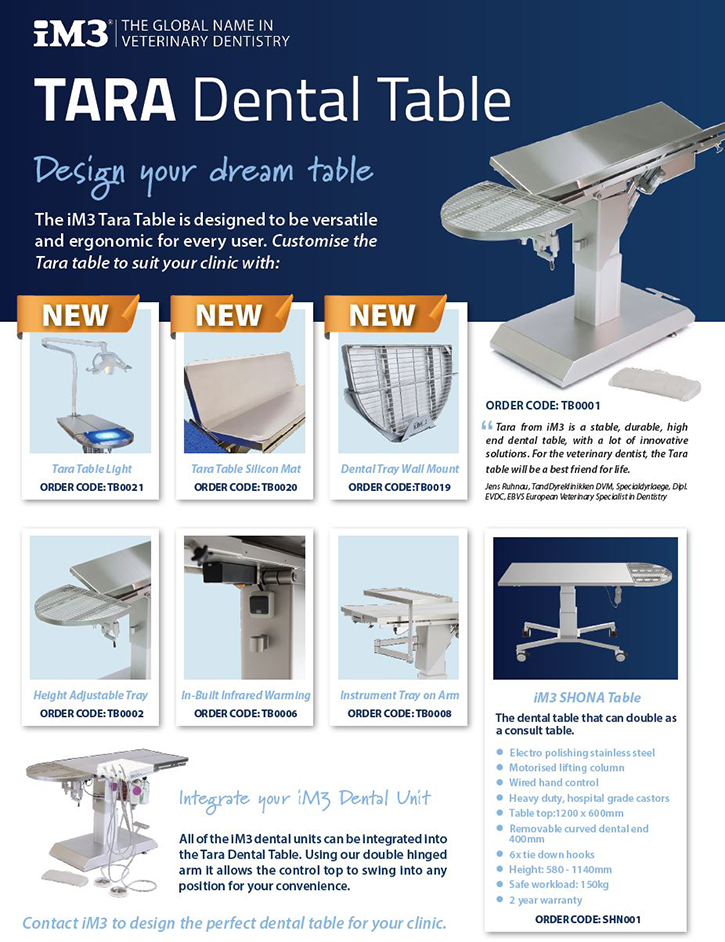
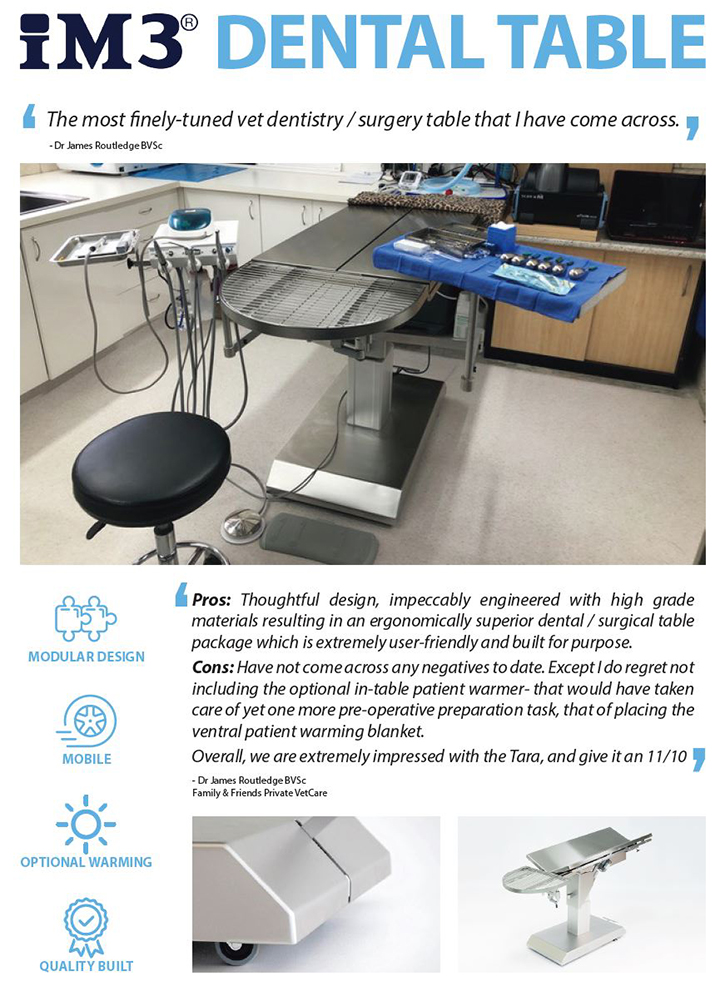
iM3 – Introducing our Shona and Tara Dental Tables
Comments Off on iM3 – Introducing our Shona and Tara Dental Tables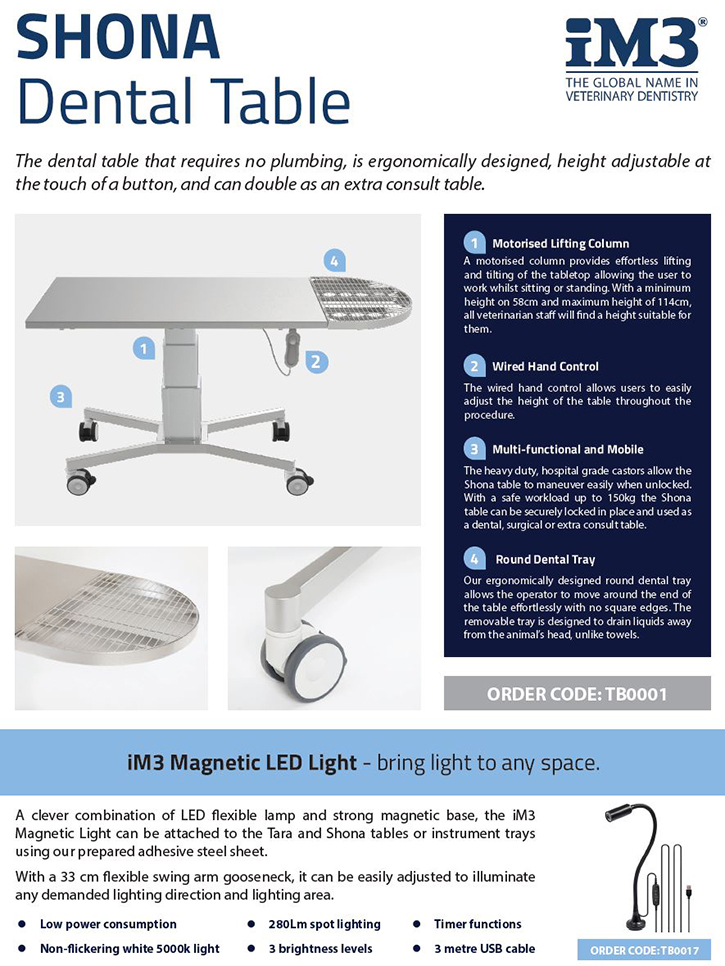
Click Here to Browse our Catalogue
Contact iM3
02 9420 5766
sales@im3vet.com

Contact iM3
02 9420 5766
sales@im3vet.com
It can be daunting for any professional to take the leap and start their own business. However, with the right team of professionals, it can be a relatively straightforward undertaking. Whilst you may have confidence in your ability to build your veterinary team, putting together a team to design and build a veterinary clinic may not be as comfortable.
A Commercial Real Estate Broker should be one of the first professionals engaged to help with finding the ideal property for your new clinic. The Broker should be able to provide a market analysis to help identify potential properties and help you narrow down the budget that should be allowed for leasing or purchasing a property. One of the first things your Real Estate Broker will need to know is how much space or how large of a property you need. By working with an experienced Veterinary Architect when you begin to search for property, you can set yourself up for success early on and minimise the time and expense of building, which is essential to every budget critical start-up.
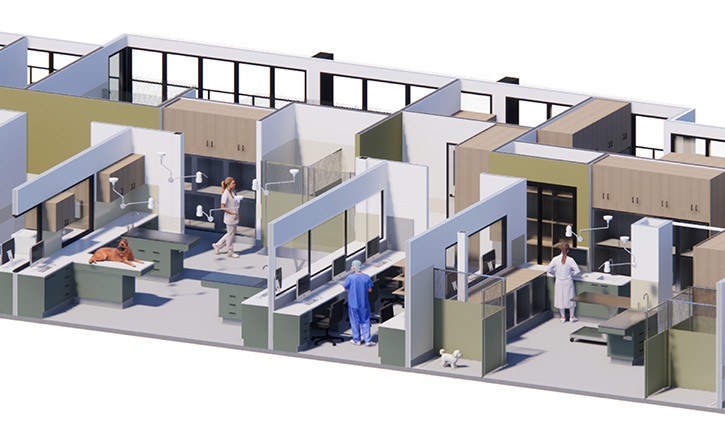
Pre-design services available from an Architect include “Needs Assessments” and “Feasibility Studies”. As part of a “Needs Assessment”, an Architect should be able to provide you with a veterinary specific design questionnaire that will ask you all the relevant questions about your intended business, to inform the project brief. Once the project brief is established, the Architect can then accurately estimate how much lease space or land is needed to suit your intended operational requirements. Having an accurate estimate of what is needed will quickly narrow the search by your Real Estate Broker. The Architect can then help evaluate the right-sized properties as part of a Feasibility Study. This process should help you confirm the suitability of specific properties for your start-up, and help you start to consider the potential costs involved with building your practice. There can be a broad variation in costs to fit out different properties. A feasibility study should identify the major costs to be expected, in addition to how well they may be suited to veterinary practice use.
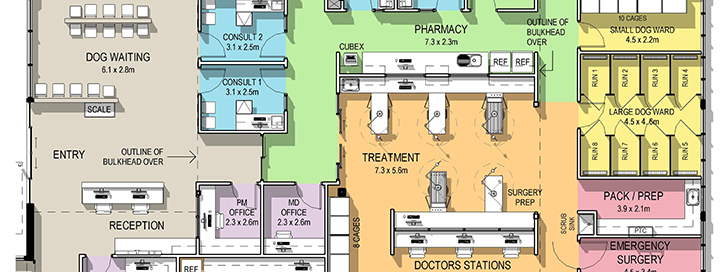
An Architect that has worked specifically with start-up veterinary practices should be able to suggest cost-saving design ideas, to help minimise the cost of the build, and maximise the revenue-generating potential for any given size clinic. It is important for every start-up not to “over-build”. Controlling the cost of the build starts with the needs assessment by establishing the size of the clinic that is needed. The Architect’s concept design has the potential to impact construction costs and potential income by optimising space usage, maximising revenue-generating areas, and minimising non-revenue-generating areas.
Lastly, during the detailed design, striking the right balance for quality of materials that minimise initial costs, while still delivering a facility that will be easy to maintain and suitable for the intended purpose is key. An experienced Veterinary Architect can advise on the relative cost of materials and the performance trade-offs between one vs another.
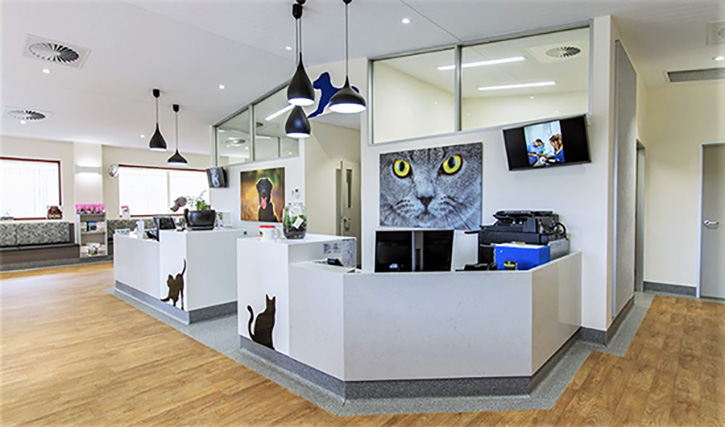
When considering a new build, be sure to pre-qualify and interview your Architect as you would anyone you are going to employ. Scrutinise their specific, relevant experience, and don’t be afraid to ask questions. The Architect should serve as a trusted adviser to support you throughout the design and build, so if they are unwilling or unable to explain the process in a way you can understand, they may not be the right fit for your project. Success starts with building the right team.
To learn more about us or to get started, please call +61 7 5657 6777 or visit: therian.com.au/veterinary-clinics-hospitals/

This state-of-the-art facility was built to promote engaging education.
Specifically designed for teaching & advancing veterinary dentistry.
The iM3 Advanced Centre for Education (ACE) strives to help veterinarians and nurses become highly skilled and component in the practice of veterinary dentistry.
Introduction to vital pulp therapy (Friday 24th February 2023) @ iM3
Drs Anthony Caiafa and Kayoko Kuroda
Course outline
This workshop will offer participants, detailed knowledge of the dental materials and the procedural steps involved in performing vital pulp therapy (VPT) in a general practice setting.
The workshop will consist of a lecture and wetlab. Participants will be able to perform the VPT procedure on extracted canine teeth, as well as radiographically monitor each step of the procedure. Tutors will be available to give one-on-one assistance during the wetlab component of the workshop.

Learning outcomes for vital pulp therapy (VPT) workshop
Introduction to root canal therapy (PM Friday 24th/25th February 2023)
Course outline
This course is designed to offer veterinarians, at an introductory level, an understanding of the discipline of endodontics, and to allow them to offer clients, an alternative to tooth extraction.
Follow up courses and training is highly recommended after this introductory course

Course objectives

 Are you an employer of a Working Holiday Maker (visa subclass 417 or 462 holders)? If so, the way that you withhold tax has changed from 1st January 2017, and you have to register with the ATO. For more information, go to https://www.ato.gov.au/business/registration/work-out-which-registrations-you-need/taxation-registrations/employer-registration–working-holiday-makers/
The tax rate for Working holiday makers is now 15%.

Some of the most common questions that we get asked at Kookaburra Vets relate to Salary levels. We’d appreciate if you would help us collect some up to date information by completing this short anonymous survey, if you are a veterinarian currently working in Australia.
The results will be available on request from Kookaburra Vets, however, if you wish to provide us with your email address at the end of the survey, we will also email you a copy. Thank you for your help.