Blog

CE Requirements – A Wind of Change?

Comments Off on CE Requirements – A Wind of Change?

banner showing different countries cpd logosAustralia, the UK, and New Zealand all have requirements for registered vets to keep up to date by recording a certain amount of continuing education. New Zealand and the UK have recently changed their focus from simply recording time spent on CE to actually evaluating and reflecting on the learning experience, in order to better support vets in practice, help vets find professional fulfilment, and to aid in retaining vets in the profession.

Australia

All Australian veterinary Boards have agreed, through the Australasian Veterinary Boards Council (AVBC) and the Australian Veterinary Association (AVA), on a minimum requirement of 60 CPD points over a consecutive 3 year cycle. At least 15 of the required 60 CPD points must be structured points. The remaining 45 points may be either unstructured points or more structured points. You may use the AVA Vet Ed points scheme to record and validate your CPD achievement

https://www.ava.com.au/education-events/veted/veted-points/

Structured Points: Most courses, conferences and seminars are 1:1 (points:hour) & Workshops are 2:1 and require validation (eg by certificate)

Unstructured Points: eg. private reading, un-assessed computer based courses  are 1:2 (points:hour)

The registered veterinary practitioner who is currently undergoing formal post-graduate training with a view to the acquisition of a higher qualification in their chosen field of work or a related area of veterinary science, is considered to be fulfilling all the requirements for continuing education.

The  points allocation table is available from the NSW Vet Board website:

https://www.vpb.nsw.gov.au/sites/default/files/images/GR05%20CPD%20Points%20Allocation%20Table.pdf

UK

All veterinary surgeons listed on the RCVS Register as practising members must complete the minimum CPD requirement of 35 hours per year, regardless of whether they are working full-time or part-time.
Vet Nurses on the RCVS Register have to complete 15 hours CPD per year.

The RCVS has an online system for veterinary surgeons (and vet nurses) to record their CPD activities (1CPD). 1CPD is a new outcomes focused CPD system, and is available as a web portal or as a mobile app. From January 2022 it has become mandatory for all veterinary surgeons to use 1CPD. Reflection on CPD outcomes, an integral part of 1CPD, is now also mandatory from 2022 and can be done using the 1CPD app.

RCVS: https://www.rcvs.org.uk/document-library/cpd-guidance-for-vets/

https://www.rcvs.org.uk/lifelong-learning/continuing-professional-development-cpd/getting-started-with-1cpd/

All vets practising in the UK, whether they graduated overseas or in the UK, must comply with the RCVS requirement of 35 hours per calendar year. You may include CPD undertaken abroad, but you should ensure that your description of this, and the hours involved, are clearly recorded in English so that the details of what you have done are transparent to, and understood by, the RCVS and others with an interest in your CPD record, such as prospective and current employers.

There is no restriction on the number of hours of self-directed learning that can count towards your CPD as long as you document it or reflect on your CPD. Ultimately, the judgement of what should count as CPD will vary for each individual, and it is therefore up to you to decide how best to fulfil your own learning needs.

PDP – Professional Development Phase
This was a requirement for newly qualified graduates and those with less than one year’s clinical experience, regardless of where they qualified in the UK or overseas. It could also be used by anyone returning to work after a career-break. Average time taken to complete the PDP is 18 months depending on caseload, but it needs to be completed within 3 years. PDP required exposure to a general practice workload. The last enrolment for the PDP was in June 2021. It has been replaced by VetGDP – Veterinary Graduate Development Programme.

VetGDP – Veterinary Graduate Development Programme.  
This is a requirement for new veterinary graduates for any graduate vets employed from summer 2021 onwards – their employer must be signed up to VetGDP and there must be a VetGDP Adviser in the workplace to support them. It is focused on developing professional skills as well as clinical capabilities and is intended to be more supportive than the PDP. Vets who have been out of practice for 5 years or longer also have to take part in VetGDP. Overseas graduates who are new RCVS members who have less than one year of significant work experience as a veterinary graduate will be expected to enrol in the VetGDP. https://www.rcvs.org.uk/lifelong-learning/vetgdp/

New Zealand

The CPD requirements in New Zealand changed from 2021 onwards. 2021 was a trial year. 

The previous CPD requirements focused on using points to quantify time spent on CPD activities, categorising activities and setting quotas that had to be met. This new framework departs from that approach and instead focusses on the process of planning, taking part in and evaluating learning. In simple terms, it requires that veterinarians must:

  1. Prepare a CPD plan
  2. Do CPD
  3. Record their CPD
  4. Review the CPD plan.

The requirements are different for new graduates in their first year of practice. This is to reflect that they have different needs as they adjust to professional life and the requirements for them focus more on collegial support in the form of mentoring.  There is flexibility in who can act as a mentor. For many new graduates, the mentor will be their employer or supervisor at work. However, it could equally be someone independent. There are no qualification or training requirements for acting as a mentor.
The Vet Council hasn’t set a minimum amount of CPD that must be undertaken. “Our expectation is that veterinarians will take part in CPD, completing all of the four steps above, and that the amount of CPD they undertake should be appropriate to their needs. We recognise that some people appreciate having a clear number to work to, so, as a guide, we believe that veterinarians should aim to undertake at least 20 hours of CPD per year. This isn’t a strict requirement, and we won’t rigidly enforce it. We emphasise that the quality of CPD and the process of planning and evaluating it is of far more importance than the quantity.”
https://www.vetcouncil.org.nz/Web/Veterinarians/Continuing_Professional_Development.aspx

Author:
Wendy Nathan
Kookaburra Veterinary Employment

This information includes the views and opinions of Kookaburra Veterinary Employment and is of a general nature only. Factual information is believed to be correct at the time of writing, however, should not be relied upon and any person should confirm details with the relevant authorities and through their own research prior to acting on any of the suggestions in this article.

11/05/2022 |

Quick Tips for Jobseekers

Comments Off on Quick Tips for Jobseekers

Are you feeling overwhelmed by the sheer number of jobs available for vets at the moment? Every clinic in Australia seems to be desperate for more vets. How do you pick the right clinic for you?

image of overwhelmed cat

1.     Create a profile of your ideal job and employer.

  • First think about your current and previous jobs – and decide what you might like to avoid in your next job, and what might be missing in your current job.
  • What is most satisfying in your current job.
  • You may have a preferred geographical area – but remember to be open to jobs outside this area too. Your perfect job might be just a little farther away or in a suburb that you’ve not yet considered.
  • What kind of workplace culture are you after? Vet Clinics are getting better at personalising their advertising, and giving an idea of their culture and mission.
  • Do you want to work for a large company group? Benefits can include the opportunity for in house education, networking, work opportunities or transfers with other practices within the group, and a range of more corporate perks and benefits. Or is a smaller, more unique practice with hands on input from one or more Owner Vets more your style?

2.     Use your connections to research clinics

Don’t be afraid to interview the Clinic – ask to have a chat with current staff, including the vet nurses. Spend a few trial days at the Clinic if possible

3.     Register with Kookaburra Vet Employment

Let Kookaburra Vets help you narrow down suitable jobs – if you can give us a geographical area and type of practice that you are looking for, then we can send you personalised email alerts with newly listed job information. So if you’re looking for a job in Gippsland, we won’t send you job information for a clinic on the Gold Coast. Avoiding information overload helps you to focus on the best jobs for you.

Kookaburra also sends personalised texts with locum job alerts. We supply full clinic details – so you can decide whether to apply or not.

You can register here: https://www.kookaburravets.com/Australia/VregOz1.asp

4.     Bookmark the m.kookaburravets.com site

Every job on the main Kookaburra Vet Employment website is also listed here – but this one is easy to read on a mobile phone, it is database driven so you can apply filters, and the new jobs listed today will always be at the top of the list. It makes it easy to just keep an eye on new vacancies.

m.kookaburravets.com

Author:
Wendy Nathan
Kookaburra Veterinary Employment

This information includes the views and opinions of Kookaburra Veterinary Employment and is of a general nature only. Factual information is believed to be correct at the time of writing, however, should not be relied upon and any person should confirm details with the relevant authorities and through their own research prior to acting on any of the suggestions in this article.

21/02/2022 |

Working as a Locum – Part 2

Comments Off on Working as a Locum – Part 2

This article covers information specific to working in Australia as a locum vet, and is taken from fact sheets produced by Kookaburra Veterinary Employment.

Registration as a Vet

Locum Vet photoYou need to register in each State in which you want to work* (see information below about National Recognition of Registration), and you must be registered prior to your first day of work. The contact details for all the Vet Boards are listed on our website at http://www.kookaburravets.com/Australia/Ozlinks.htm on the links page. The requirements vary from State to State but basically you’ll need to fill out the forms, pay the fee, provide proof of your ID and degree certificate, and probably provide a letter of good standing from the last place you were registered with. The fee varies a lot, contact the state boards for current pricing. Some States have pro rata registration which is really handy for locums, and WA has temporary registration on a month to month basis (maximum 3 months).

Most vets doing locum work register in just one State to start with until they see where they want to work, and then register as required in others. It doesn’t usually take very long in any of the States (a couple of weeks at most).

Note that in WA you have to present in person at the Board Office in Perth in order to register.

You will get a registration number, and it’s good practice to print the number with your signature when signing any forms in Practice.

*NB: There is currently National Recognition of Registration in Queensland, New South Wales, Victoria, Tasmania, South Australia, and the ACT – Veterinary surgeons who currently hold primary registration and reside permanently in another Australian state or territory are entitled to practise as a veterinary surgeon in these States on a part-time, casual or locum basis without having to register with the local Veterinary Board. In Northern Territory, secondary registration is now free of charge although vets intending working in the NT should still fill the paperwork out to apply for secondary registration.

Tax

Contact your accountant or the ATO for advice regarding the most tax effective way for you to work as a locum.

Casual Employee

You have to fill out a form notifying your TFN (tax file number) to each employer when you start work, and they then deduct tax from your pay. You have to fill out a Tax Return at the end of the Financial year (June 30), and you may get a tax refund.

Your employer should also pay Superannuation (a compulsory pension) for you into a Super fund, of your choice. From 1st Nov 2021 employers are required to check with the ATO whether the employee has a “stapled fund” (ie. their preferred existing fund). Super is currently 10% of salary.

Contractor/Self-Employed

Australian locums have historically worked as self-employed contractors, however, you have to register as a business and get an ABN – Australian Business Number. You must provide this ABN to the clinic before they can pay you as a contractor/self employed locum. The clinic then pays you in full, and you sort out your own tax. You can find more info at www.ato.gov.au You may also have to register for GST. Unless you are a registered company, for normal locum work it’s likely that the clinic should also pay superannuation for you under the Superannuation Guarantee – consult your accountant or contact the ATO for more information. However, even if you supply the clinic with an ABN and an invoice for your work, it is still possible that for both tax and superannuation purposes you should be treated as an employee. You can find more info and an online calculator to assess whether you are an employee or a contractor at www.ato.gov.au/business/employee-or-contractor/how-to-work-it-out–employee-or-contractor/

Pay Rates

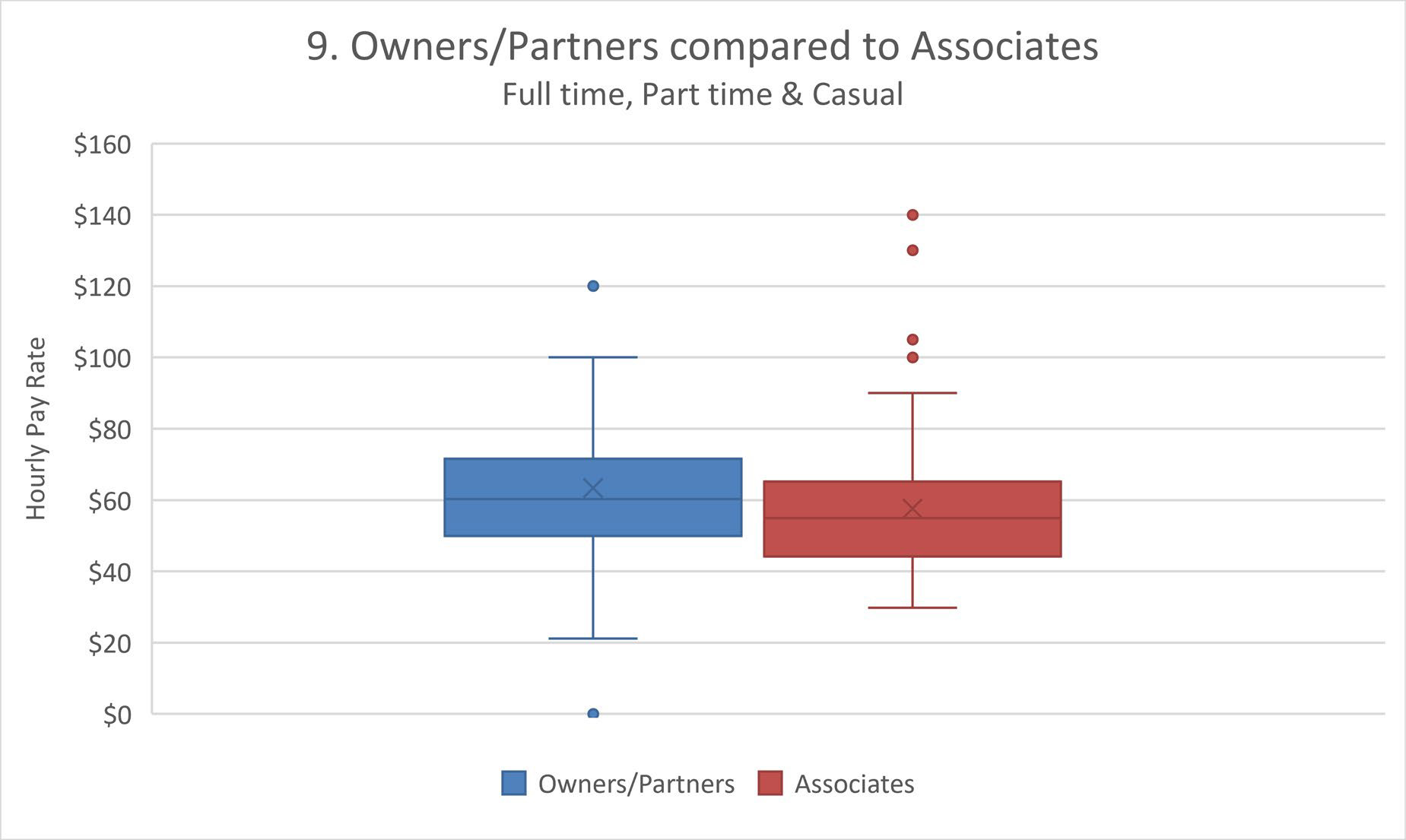
Locum rates range from $35 to $80+ an hour (average $55-65/hr) at the moment (November 2021). If you do out of hours work you should get paid an on call allowance for having the phone for each period up to 24 hours, and then get the relevant hourly rate if you do any calls. Some clinics still pay a % of the professional fee for any out of hours calls. Quite a lot of city practices use out of hours emergency centres now so there’s no OOH duties. Minimum employment conditions are set by the Animal Care and Veterinary Services Award 2020 – you can find copies online by Googling the Award name.

To see 2019 Salary Survey Results compiled by Kookaburra, visit https://www.vetsuppliersdirectory.com.au/2019-salary-survey-results-part-1/

Professional Indemnity Insurance

The Practice Insurer may cover all vets working at the practice – locums should ask the clinic to check. However, it is a good idea to have your own PI Insurance. If working in South Australia, any vet must be covered by either their own or third party PII arrangements as a requirement of registration – and this also applies to vets practising under interstate registration.

Providers include:

  • Veterinary Defence Association 02 8355 9900 info@vetdefenceco.com
  • Guild Insurance 1800 810213
  • Petplan Professional 0411 265746 petplanpro@petplan.com.au

Workcover Insurance

Workcover comprises work health and safety and workers compensation laws. Work-related injuries should be covered by the compulsory insurance required for every employer. Contractors may be covered also, depending on their working arrangements.

Other Professional Registration

Radiation

State legislation requires vets to be licensed in order to use Radiation Equipment. The process varies from State to State – ask the clinic that you are going to be working at. There is now a Mutual Recognition Act that may cover applications for a licence in other States or Territories.

Microchipping

microchip dog photo

Some States have compulsory microchip identification of companion animal cats and dogs, and implanters are required to be licensed in Qld, NSW and Victoria. You may also be required to be licensed to implant microchips in horses.

Author:

Wendy Nathan
Kookaburra Veterinary Employment

This information includes the views and opinions of Kookaburra Veterinary Employment and is of a general nature only. Factual information is believed to be correct at the time of writing, however, should not be relied upon and any person should confirm details with the relevant authorities and through their own research prior to acting on any of the suggestions in this article.

29/11/2021 |

Working as a Locum – Part 1

Comments Off on Working as a Locum – Part 1

To work as a locum, vets should have a minimum of 2 years’ experience, and preferably over 3 years for sole charge practices. Not only is locuming a great way to finance travel, it is also a good way to gain additional experience working with different people, in a wide variety of different conditions, and improve your veterinary skills.

photo of vetsIn major cities, although there are more clinics in a smaller geographical area, there is usually more competition for locum work, therefore to be assured of a constant supply of work, locums should be willing to travel – and you can miss out on amazing experiences if you don’t consider travelling to work in more rural and regional areas. Country jobs will usually supply accommodation and maybe a vehicle for work and private use, however, city practices very rarely supply either accommodation or a vehicle.

Locum vacancies can range from a single shift to 5 or 6 months’ work, and include full time and part time hours. Locums help cover for temporary staffing shortages, illness, periods of leave and holidays, and parental leave. Jobs can be advertised up to 4 months in advance, however, they can also be listed at very short notice (next day). On average, locum jobs listed with Kookaburra Vet Employment are to start within 1-2 months.

Work

Most clinics require a locum with a minimum of 2-3 years’ experience who doesn’t require direction for most clinical judgments, but who will ask for help if it’s required or if they get out of their depth. Surgical experience is necessary – you must be able to do at least routine surgery including desexings in a timely manner (ie. not take too long).

It can be important to stick to clinic protocols, within a perceived duty of care. Clinics may see a high proportion of particular types of cases – eg ticks; snake bite; poisonings – ask the regular vet before they go away if there is a clinic protocol or for any tips on these type of cases.

Record keeping is extremely important – the locum may move on, but the clinic owner or regular vet then has to continue with ongoing care. Make sure that your handwriting is legible, and you use any computerised system to keep comprehensive clinical notes. Locums should try to fit in with existing staff and not rock the boat!

Make sure that you stick to practice pricing – please don’t undercharge just because you perceive the practice prices to be excessive.

Try not to put things off until the regular vet gets back.

Conduct

Practices expect a locum to be honest, punctual, friendly, polite, and able to take direction if required without taking offence. Derogatory, sexist, and discriminatory behaviour and comments are absolutely not acceptable.

If a work vehicle, or a vehicle for private use is supplied, it should be kept clean on the inside (if not the outside!), and driven with due care and attention. Establish the protocol for paying for petrol before commencing work.

If accommodation is supplied, it should be left clean and tidy. Talk to the employer about any use of private items or groceries if you are staying in their own house BEFORE you use anything, and establish whether you are expected to replace any items used.

CVs and References:

You should be prepared to send your CV to clinics when you apply for a vacancy. It should contain up to date information and be accurate, particularly with up to date contact information for you including a mobile number preferably with a message bank. Include contact details for recent referees, and email addresses, particularly if your referees are overseas.

Contract

article-contract-signingdesigned-by-freepik-smallerAlthough practices and locums may not decide to formally enter into a contract, it is a good idea to set down terms of employment and working conditions in writing prior to the start of the locum period. Things to consider include:

  • Pay rate;
  • after hours remuneration;
  • days off;
  • overtime;
  • normal hours of work;
  • type of payment arrangement and when the vet is to be paid;
  • type of employment (casual employee, contractor);
  • Superannuation; GST;
  • Travel Costs;
  • Professional registration costs;
  • Responsibility for keys – for the clinic and for scheduled drugs
  • Accommodation and responsibilities of the locum with respect to the accommodation and use of facilities if applicable (eg phone, internet, food in the pantry);
  • provision of vehicle for work – and private use – and fuel costs;
  • any provision for short term cancellation of the locum period by either party.

This list is by no means exhaustive. Contact the AVA HR Hotline for more information – 1300 788977 or email avahrhotline@whr.com.au  (you need to be an AVA member (Australian Veterinary Association).

Author:

Wendy Nathan
Kookaburra Veterinary Employment

This information includes the views and opinions of Kookaburra Veterinary Employment and is of a general nature only. Factual information is believed to be correct at the time of writing, however, should not be relied upon and any person should confirm details with the relevant authorities and through their own research prior to acting on any of the suggestions in this article.

03/11/2021 |

Applying for Jobs – Graduate Veterinarians

Comments Off on Applying for Jobs – Graduate Veterinarians

Interview Day on calendarAlthough this article was written for new Veterinary Graduates, and first published in the Kookaburra Veterinary Employment new graduate job newsletter, the general points covered are equally applicable to experienced vets.

How To Apply

Initial contact depends on the job advert – if it asks for applications in writing then don’t phone up. If you are happy to chat on the phone, then this is a great way to find out more about a clinic. If you prefer to send your CV first then that is fine.

Include:

  • your CV
  • written reference/s if you have them,
  • A cover letter.

You can email, post, or fax these. A cover letter should say why you’re sending your CV, and include for example:

  • a little bit of information about what type of job you are looking for, what your interests are, aims, skill competencies, etc
  • why you feel this one is suited to your particular skills
  • what level of commitment you are offering eg. Practices are often hopeful that new graduates will stay longer than 12 months.
  • Any other relevant info that isn’t included on your CV, for example, visa details for overseas graduates.

If the ad gives a phone number then phone the clinic first to find out if the job is still available, and to ask if you can send your details through.

Follow-up:

Follow-up is really important. Vet Clinics are busy places, and Vets are notoriously unorganised. Your CV may sit on, or even worse, at the bottom of a pile of papers waiting for a “paperwork day”. Don’t assume that just because you haven’t heard anything, they’re not interested. Kookaburra Veterinary Employment receives many calls from clinics where they have mistakenly deleted emails (or they’ve gone to spam), mislaid paperwork, and lost the bit of paper with a vital phone number and name.

  1. Phone to make sure they received your CV/letter and to give them a voice to put to the paperwork.
  2. If you haven’t heard anything, follow up again in 2 weeks. Don’t pester the clinic, but don’t leave it too long either. Even when a clinic says they’ll ring you, often they won’t!

Interview:

cartoon of interview techniqueIt’s important to have a face to face interview if possible. Not only does the clinic need to evaluate you, you need to evaluate the clinic – see whether it’s up to date, does it run smoothly, meet the vets and the nurses and see if you’ll be able to get on with them ok, do they allow enough time to meet you properly and show you around. It’s best to spend half a day, or even a full day at the clinic. If it’s a mixed practice, take your protective clothing along so you can go on calls if necessary.

Be on time and look smart!

You shouldn’t just have a ½ hour interview – the clinic may feel they are able to make a snap judgement about you in that time, but they may get a false impression, and you certainly can’t get a good impression of them in that time. If that is what they offer, ask if you can spend the rest of the day at the clinic anyway.

Many clinics will pay your accommodation and travel expenses if necessary for an interview, within Australia.

Practice your interview technique with your family and friends – don’t use clinics to get interview experience. Only accept interview opportunities if you are really serious about your job application.

Research:

Make sure you do some research about the clinic or company that you are applying for a job with. Look them up online; check out their website, opening hours, Facebook page, Instagram account. They’re probably going to be looking you up! Phone the clinic and chat to the receptionist or the vet nurse who answers the phone, or ask if you can contact any current employees, or the employee who is leaving. In addition, check out the local area if you’re anticipating relocating. Look up clubs, sports facilities, schools, recreational opportunities, & real estate.

Too many new graduates take a job, and then leave in under 12 months. You must make sure that it is the type of clinic that you would feel happy working in, and that you will get the support necessary to kick start your career.

  • Talk to the vet, ask them about the clinic – the type and proportion of work they do, any special interests, find out the shift roster, what equipment they have, is there a range of clinic protocols, do they do in house pathology etc
  • Talk to the nurses. Nurses are extremely important allies for recent grads. They often know more than you do about common problems and dealing with clients, and they are very familiar with clinic protocols. You need to be able to get on with the nurses and support staff.
  • Will they be able to support you as a new graduate adequately? Graduates vary as to the amount of support they need – you may need hands-on supervision for some procedures and not for others; will you be able to talk to another vet at any time if you need advice? Are the nurses fully qualified? Do they have a structured support programme for new grads?
  • Ask about the after-hours roster. In my first job, for the first month I didn’t have to do out of hours calls. Then, once I knew my way around, I was added to the roster, but with a 2nd vet to call if necessary. This is a very good way to ease you in gently and relieves your stress levels considerably (and those of the clients!).

Salary Expectations

At some point in your interview, you may be asked what your salary expectations are, or alternatively, it may be important for you to ask what the salary on offer is. Some employers may turn the question around and ask what you’re making now. If you don’t expect the question, you may have an awkward moment. Do as much research as you can so that you’re prepared. The Animal Care and Veterinary Services Award 2010 [MA000118] sets minimum hourly rates. New graduate salaries often stay close to the Award. Kookaburra Veterinary Employment’s 2019 Salary Survey is published at https://www.vetsuppliersdirectory.com.au/2019-salary-survey-results-part-1/

You could say something like “according to my research, my understanding is that $60-70K per year is typical based on the role and requirements” or if you want to delay answering, “I’m more interested in finding a position that’s a good fit for my skills and interests. Could we talk about salary once I’ve heard more about the job on offer?”.   Be honest; be realistic, and don’t sell yourself short. It’s also important to look beyond the Salary figure – look at any additional benefits such as training & bonuses. If you think you’re currently being underpaid, let them know what you’re being paid at the moment, but that you know from research that other vets are getting a certain amount at this level, and why you believe that you are worth it.

Getting a job offer:

If you are offered a job, you don’t have to accept immediately – it’s ok to let them know you have other interviews and wait to see what else you are offered. However, please keep the surgeries up to date with your plans and if you are going to turn them down, tell them so. It is not good practice to accept a job, and then continue to attend other interviews in the hope of getting a ‘better’ job – and then calling the first practice a week before you are due to start work to tell them that you won’t be turning up after all. Behaving in this way will hurt your future job prospects and your reputation.

If you accept a job, ask for a firm offer letter in writing to avoid misunderstandings. If a clinic won’t give you a firm offer or messes around, then don’t take the job! They probably wouldn’t be very good to work for.

You can also request a contract or similar document stating your conditions of work.

A General Note of advice:

Don’t restrict your search to your local home area – be prepared to travel. Although new grads do need a lot of support, sometimes it can be better to move right away from home so that you can concentrate on settling in to your new job, getting to know the people you work with, joining in local activities etc.

Author:

Wendy Nathan
Kookaburra Veterinary Employment

This information includes the views and opinions of Kookaburra Veterinary Employment and is of a general nature only. Factual information is believed to be correct at the time of writing, however, should not be relied upon and any person should confirm details with the relevant authorities and through their own research prior to acting on any of the suggestions in this article.

Job search representation

02/09/2021 |
© Vet Suppliers Directory 2019. Vantage Theme – Powered by WordPress.
Skip to toolbar